

Scaffolding SWMS
This SWMS covers scaffolding work from planning and site preparation through erection, use, inspection, maintenance, dismantling and close-out.
Activities covered include
- Plan scaffold work and coordinate site activities
- Install ties, access and containment measures
- Clear materials and complete site close-out
Download immediately
Your editable Word and PDF files are ready to download after purchase.
Acceptance guaranteed
If your client or principal requests changes during document review, BlueSafe will help revise the document at no extra cost and support resubmission until it is accepted.
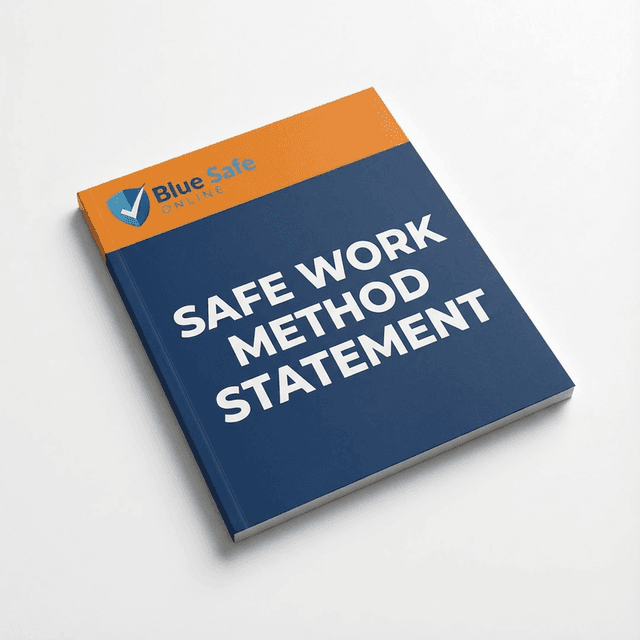
- 100% Compliant with Australian WHS Acts & Regulations
- Fully Editable MS Word & PDF Formats Included
- Pre-filled Content - Ready to Deploy Immediately
- Customisable - Easily Add Your Logo & Site Details
- Includes 2 Years of Free Compliance Updates
Product Overview
This SWMS covers scaffolding work from planning and site preparation through erection, use, inspection, maintenance, dismantling and close-out. It supports planning for falls, falling components, stability, access, loading and site interaction hazards.
Activities & Specific Tasks Covered
This document includes task-specific risk controls for:
- Plan scaffold work and coordinate site activities
- Establish exclusion zones and control site access
- Unload, inspect and handle scaffold components
- Prepare foundations, bases and support areas
- Erect scaffold lifts, bracing and working platforms
- Install ties, access and containment measures
- Inspect, tag and hand over the scaffold
- Use the scaffold and prevent unauthorised alteration
- Manage bird nests and droppings where encountered
- Monitor, maintain and progressively dismantle the scaffold
- Clear materials and complete site close-out
Who is this for?
For contractors, workers, supervisors and businesses carrying out scaffolding work.
Specific Job Steps & Hazards Covered
| Job Step / Activity | Potential Hazards |
|---|---|
| Plan work and consult |
|
| Establish site exclusion zones |
|
| Unload and inspect components |
|
| Prepare foundations and base |
|
| Erect initial scaffold lifts |
|
| Install ties and working platforms |
|
| Install access and containment |
|
| Inspect, tag and hand over |
|
| Use scaffold for work |
|
| Manage bird nests and droppings |
|
| Monitor and maintain scaffold |
|
| Dismantle scaffold progressively |
|
| Clear site and close out |
|
Need to add specific site requirements?
Use the BlueSafe Portal to tailor this SWMS with site-specific details, job steps, hazards, controls and responsibilities before work starts.
Acceptance Guaranteed: If your client or principal requests changes during document review, BlueSafe will help revise the document at no extra cost and support resubmission until it is accepted.
Legislation & References
The template includes references relevant to the documented work, including:
- Applicable Commonwealth, state or territory WHS/OHS legislation and regulations, including duties to manage risks, provide safe plant and workplace, consult workers, manage falls, falling objects, construction work, high risk construction work, plant and scaffolding.
- Model Code of Practice: Scaffolding (2021) — use as guidance where adopted or otherwise relevant; scaffold plans, licensing, inspection, handover, falling-object and alteration controls.
- Model Code of Practice: Managing the Risk of Falls at Workplaces — use as guidance where adopted or otherwise relevant; scaffold conformity, edge protection, safe access, load limits and prevention of unauthorised alteration.
- Model Code of Practice: How to Manage Work Health and Safety Risks — use as guidance where adopted or otherwise relevant.
- Model Code of Practice: Construction Work — use as guidance where adopted or otherwise relevant for SWMS, consultation and site controls.
- AS/NZS 1576 series Scaffolding; AS/NZS 4576 Guidelines for scaffolding; AS 1577 Scaffold planks; AS/NZS 1891 series Industrial fall-arrest systems; AS/NZS 3012 Electrical installations—construction and demolition sites; AS 1319 Safety signs for the occupational environment.
- Confirm the legislation, approved codes, electrical approach distances, environmental and wildlife-protection requirements applying in the state or territory before work starts; model laws and model Codes do not automatically have legal effect in every jurisdiction.
Standard SWMS Features (Click to Expand)
- Task-specific job steps, hazards and control measures
- Initial and residual risk ratings
- Assigned responsible persons for each job step
- Plant, equipment and PPE requirements where applicable
- Permits, qualifications and high-risk construction work details where applicable
- Worker consultation, sign-off and review sections
Suitable for Industries
Related templates
$79.50
$96.80
Includes all formats + 2 years updates
Acceptance guaranteed
If your client or principal requests changes during document review, BlueSafe will help revise the document at no extra cost and support resubmission until it is accepted.
$79.50
$96.80
One-time payment