

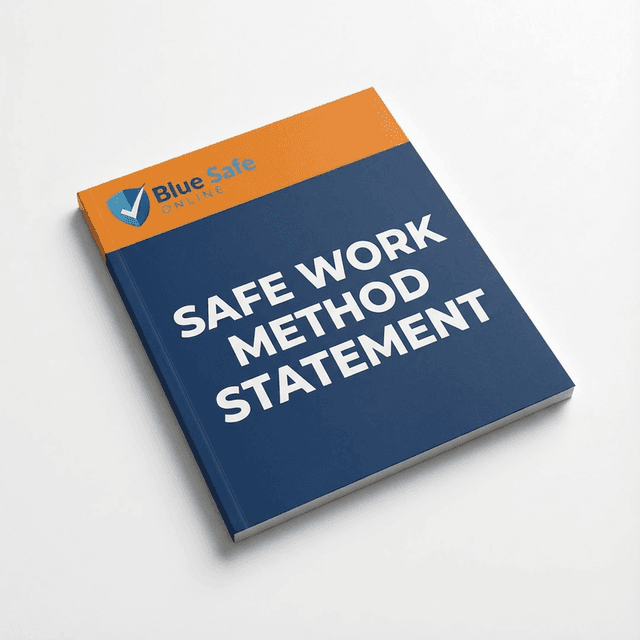
Roof Installation and Tiling SWMS
This SWMS covers planning, roof access, material handling, roofing installation, hot work, coatings and close-out activities.
Activities covered include
- Plan the work, coordinate workers and review roof and weather hazards
- Remove existing roofing materials and manage debris
- Inspect the completed work, clean up and demobilise
Download immediately
Your editable Word and PDF files are ready to download after purchase.
Acceptance guaranteed
If your client or principal requests changes during document review, BlueSafe will help revise the document at no extra cost and support resubmission until it is accepted.
- 100% Compliant with Australian WHS Acts & Regulations
- Fully Editable MS Word & PDF Formats Included
- Pre-filled Content - Ready to Deploy Immediately
- Customisable - Easily Add Your Logo & Site Details
- Includes 2 Years of Free Compliance Updates
Product Overview
This SWMS covers planning, roof access, material handling, roofing installation, hot work, coatings and close-out activities. It supports work planning by identifying roof, fall, material, weather, chemical and fire-related hazards for risk management.
Activities & Specific Tasks Covered
This document includes task-specific risk controls for:
- Plan the work, coordinate workers and review roof and weather hazards
- Set up the site, access arrangements and exclusion zones
- Inspect the roof, openings, sheeting and nearby services
- Install access systems and fall protection
- Deliver, lift and position roofing materials
- Remove existing roofing materials and manage debris
- Install underlay, battens, edges, metal sheets and roofing
- Lay tiles, ridge caps, membrane and roll roofing
- Carry out torch welding and hot-mop work
- Apply coatings and foam products
- Inspect the completed work, clean up and demobilise
Who is this for?
Suitable for contractors, workers, supervisors and businesses carrying out roof installation and tiling activities.
Specific Job Steps & Hazards Covered
| Job Step / Activity | Potential Hazards |
|---|---|
| Plan work and induct workers |
|
| Set up site and exclusion zones |
|
| Inspect roof and identify hazards |
|
| Install access and fall protection |
|
| Deliver and lift roofing materials |
|
| Remove existing roofing materials |
|
| Install underlay battens and edges |
|
| Install metal sheets and roofing |
|
| Lay tiles and ridge caps |
|
| Install membrane and roll roofing |
|
| Torch weld and hot mop |
|
| Spray coatings and apply foam |
|
| Inspect, clean and demobilise |
|
Need to add specific site requirements?
Use the BlueSafe Portal to tailor this SWMS with site-specific details, job steps, hazards, controls and responsibilities before work starts.
Acceptance Guaranteed: If your client or principal requests changes during document review, BlueSafe will help revise the document at no extra cost and support resubmission until it is accepted.
Legislation & References
The template includes references relevant to the documented work, including:
- Applicable Commonwealth, state or territory WHS/OHS legislation and regulations, including duties to manage risks, provide safe systems of work, consult workers, manage falls, plant, hazardous chemicals, asbestos, electrical risks and high risk construction work.
- Model Code of Practice: Construction Work, including SWMS requirements for high risk construction work. Model Codes should be used as guidance unless adopted or approved in the relevant jurisdiction.
- Model Code of Practice: Managing the Risk of Falls at Workplaces, including the preference for higher-order fall controls and requirements for fall-arrest system selection, use and inspection.
- Code of Practice: Work on Roofs – Commercial and Industrial Buildings, as relevant guidance for roof planning, access, fragile roofs, material placement, weather and falling-object controls.
- Model Code of Practice: Managing Electrical Risks in the Workplace and guidance for work near overhead and underground electric lines.
- Model Code of Practice: Hazardous Manual Tasks.
- Model Codes of Practice: How to Manage and Control Asbestos in the Workplace and How to Safely Remove Asbestos.
- AS/NZS 1576 series Scaffolding; AS 4576 Guidelines for Scaffolding; AS 1657 Fixed Platforms, Walkways, Stairways and Ladders.
- AS/NZS 1891 series Industrial Fall-Arrest Systems and Devices; AS/NZS 5532 Single Point Anchor Device for Use with Harness-Based Work Positioning and Fall-Arrest Systems.
- AS/NZS 3012 Electrical Installations – Construction and Demolition Sites; AS/NZS 3760 In-service Safety Inspection and Testing of Electrical Equipment.
- AS 3959 Construction of Buildings in Bushfire-Prone Areas, where applicable; manufacturer installation instructions and engineered roof design documentation.
Standard SWMS Features (Click to Expand)
- Task-specific job steps, hazards and control measures
- Initial and residual risk ratings
- Assigned responsible persons for each job step
- Plant, equipment and PPE requirements where applicable
- Permits, qualifications and high-risk construction work details where applicable
- Worker consultation, sign-off and review sections
Suitable for Industries
Related templates
$79.50
$96.80
Includes all formats + 2 years updates
Acceptance guaranteed
If your client or principal requests changes during document review, BlueSafe will help revise the document at no extra cost and support resubmission until it is accepted.
$79.50
$96.80
One-time payment