

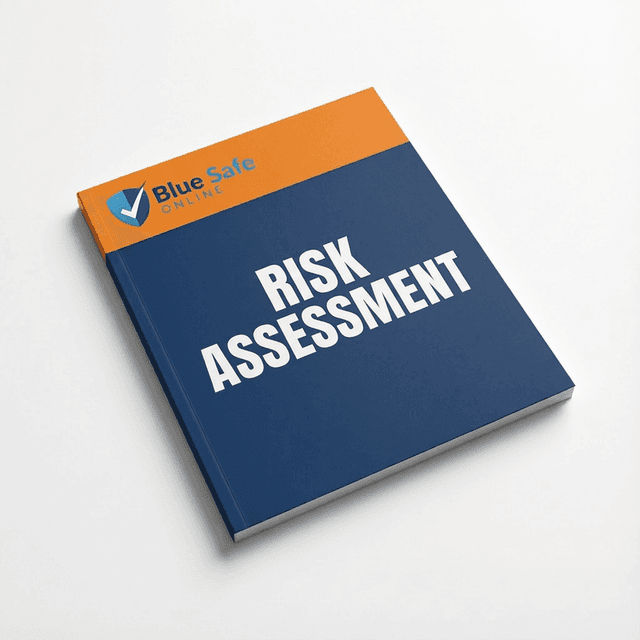
Sign Installation Risk Assessment
- 100% Compliant with Australian WHS Acts & Regulations
- Fully Editable MS Word & PDF Formats Included
- Pre-filled Content – Ready to Deploy Immediately
- Customisable – Easily Add Your Logo & Site Details
- Includes 2 Years of Free Compliance Updates
Two Ways to Get Started
Upload your logo and company details — we'll customise all your documents automatically.
Download the Word template and edit directly.
Product Overview
Identify and control organisational risks associated with Sign Installation activities through a structured, management‑level Risk Assessment that focuses on governance, planning, competency, and systems. This document supports compliance with the WHS Act, demonstrates Due Diligence, and helps protect your business from operational and legal liability.
Risk Categories & Hazards Covered
This document assesses risks and outlines management controls for:
- WHS Governance, Roles and Consultation: Assessment of leadership responsibilities, allocation of WHS duties, consultation arrangements with workers and other PCBUs, and documentation of decision‑making for sign installation activities.
- Competency, Licensing and Training Management: Management of licences (e.g. EWP, dogging, rigging), verification of competency, induction programs, refresher training schedules, and record‑keeping systems for all personnel involved in signage work.
- Design, Engineering and Structural Integrity of Signage: Controls for engineering certification, design verification, load calculations, wind loading, fixings, anchorage systems, and change management when modifying existing signs or structures.
- Planning, Job Scoping and Risk Assessment Systems: Protocols for pre‑start planning, site inspections, task risk assessments, work sequencing, and coordination with clients, building managers and other trades before installation commences.
- Access, Work at Heights and Fall Prevention Systems: Management of ladders, scaffolds, EWPs, roof access, edge protection, anchor points and fall‑arrest systems, including inspection, selection, and safe access planning for elevated signage.
- Plant, Equipment and EWP Management: Systems for selection, inspection, maintenance and safe operation of plant such as EWPs, cranes, drilling equipment, power tools and installation equipment used in signage works.
- Lifting, Rigging and Manual Handling Systems: Assessment of lifting plans for large or heavy signs, rigging configurations, load stability, use of mechanical aids, and controls to minimise musculoskeletal injury from repetitive or awkward handling.
- Electrical and Electronic Signage Safety Management: Management of electrical isolation, lock‑out/tag‑out, connection of illuminated or digital signage, IP ratings, testing and tagging, and coordination with licensed electrical contractors.
- Excavation, Underground Services and Temporary Works: Protocols for locating and protecting underground services, managing footing and post hole excavations, shoring or support of temporary works, and reinstatement of surfaces.
- Traffic, Public Interface and Site Security Management: Planning of traffic control, pedestrian separation, barricading, signage for road users, public protection from falling objects, and after‑hours site security for partially completed installations.
- Workshop, Yard and Vehicle‑Based Operations (incl. Vehicle Graphics): Controls for fabrication, cutting, painting and assembly of signs, safe use of machinery and tools, vehicle loading and restraint, and application of vehicle graphics on and off site.
- Contractor, Subcontractor and PCBU Management: Systems for prequalification, competency verification, scope definition, WHS documentation review, and coordination between multiple PCBUs involved in sign installation projects.
- Hazardous Substances, Environmental and Weather Management: Management of adhesives, paints, solvents and resins, spill control, waste disposal, noise and dust impacts, and planning for extreme weather, wind, heat and storm conditions.
- Incident Reporting, Emergency Response and First Aid: Procedures for incident notification, investigation, corrective actions, emergency response planning for falls, electrical shock or structural failure, and provision of first aid resources.
- Health Monitoring, Fatigue and Psychosocial Risk Management: Assessment of work hours, scheduling, lone or remote work, exposure to noise or hazardous substances, and systems to address stress, aggression from the public, and other psychosocial hazards.
Who is this for?
This Risk Assessment is designed for Business Owners, General Managers, Project Managers and Safety Officers responsible for planning, approving and overseeing Sign Installation operations and associated WHS management systems.
Hazards & Risks Covered
| Hazard | Risk Description |
|---|---|
| 1. WHS Governance, Roles and Consultation |
|
| 2. Competency, Licensing and Training Management |
|
| 3. Design, Engineering and Structural Integrity of Signage |
|
| 4. Planning, Job Scoping and Risk Assessment Systems |
|
| 5. Access, Work at Heights and Fall Prevention Systems |
|
| 6. Plant, Equipment and EWP Management |
|
| 7. Lifting, Rigging and Manual Handling Systems |
|
| 8. Electrical and Electronic Signage Safety Management |
|
| 9. Excavation, Underground Services and Temporary Works |
|
| 10. Traffic, Public Interface and Site Security Management |
|
| 11. Workshop, Yard and Vehicle‑Based Operations (incl. Vehicle Graphics) |
|
| 12. Contractor, Subcontractor and PCBU Management |
|
| 13. Hazardous Substances, Environmental and Weather Management |
|
| 14. Incident Reporting, Emergency Response and First Aid |
|
| 15. Health Monitoring, Fatigue and Psychosocial Risk Management |
|
| 16. Documentation, Records and Continuous Improvement |
|
Need to add specific hazards for your workplace?
Don't worry if a specific hazard isn't listed above. Once you purchase, simply log in to your Client Portal and add your own custom hazards at no extra cost. We take care of the hard work—creating the risk ratings and control measures for free—to ensure your document is compliant within minutes.
Legislation & References
This document was researched and developed to align with:
- Work Health and Safety Act 2011
- Work Health and Safety Regulations 2017
- AS/NZS ISO 31000:2018: Risk management — Guidelines
- Safe Work Australia – Managing the Risk of Falls at Workplaces Code of Practice: Guidance on controlling fall risks for work at heights, including sign installation activities.
- Safe Work Australia – Construction Work Code of Practice: Requirements for planning, consultation and risk management for construction‑related sign installation tasks.
- Safe Work Australia – Managing Risks of Plant in the Workplace Code of Practice: Guidance on selection, inspection and use of plant such as EWPs, cranes and power tools.
- Safe Work Australia – Hazardous Manual Tasks Code of Practice: Controls for lifting, carrying and handling of signs and associated components.
- Safe Work Australia – Managing Electrical Risks in the Workplace Code of Practice: Requirements for electrical safety, isolation and work on or near electrical installations and equipment.
- AS 2550 series: Cranes, hoists and winches — Safe use standards relevant to lifting and positioning large signage structures.
- AS 1891 series: Industrial fall‑arrest systems and devices — Requirements for harnesses, lanyards, anchorages and associated equipment.
- AS/NZS 3012: Electrical installations — Construction and demolition sites, including temporary power for sign installation works.
- AS 1319: Safety signs for the occupational environment — Requirements for safety and warning signage on and around work areas.
Standard Risk Assessment Features (Click to Expand)
- Comprehensive hazard identification for all activities
- Risk rating matrix with likelihood and consequence analysis
- Existing control measures evaluation
- Residual risk assessment after controls
- Hierarchy of controls recommendations
- Action priority rankings
- Review and monitoring requirements
- Consultation and communication records
- Legal compliance references
- Sign-off and approval sections
Suitable for Industries
$79.5
Includes all formats + 2 years updates
Sign Installation Risk Assessment
- • 100% Compliant with Australian WHS Acts & Regulations
- • Fully Editable MS Word & PDF Formats Included
- • Pre-filled Content – Ready to Deploy Immediately
- • Customisable – Easily Add Your Logo & Site Details
- • Includes 2 Years of Free Compliance Updates
Sign Installation Risk Assessment
Product Overview
Identify and control organisational risks associated with Sign Installation activities through a structured, management‑level Risk Assessment that focuses on governance, planning, competency, and systems. This document supports compliance with the WHS Act, demonstrates Due Diligence, and helps protect your business from operational and legal liability.
Risk Categories & Hazards Covered
This document assesses risks and outlines management controls for:
- WHS Governance, Roles and Consultation: Assessment of leadership responsibilities, allocation of WHS duties, consultation arrangements with workers and other PCBUs, and documentation of decision‑making for sign installation activities.
- Competency, Licensing and Training Management: Management of licences (e.g. EWP, dogging, rigging), verification of competency, induction programs, refresher training schedules, and record‑keeping systems for all personnel involved in signage work.
- Design, Engineering and Structural Integrity of Signage: Controls for engineering certification, design verification, load calculations, wind loading, fixings, anchorage systems, and change management when modifying existing signs or structures.
- Planning, Job Scoping and Risk Assessment Systems: Protocols for pre‑start planning, site inspections, task risk assessments, work sequencing, and coordination with clients, building managers and other trades before installation commences.
- Access, Work at Heights and Fall Prevention Systems: Management of ladders, scaffolds, EWPs, roof access, edge protection, anchor points and fall‑arrest systems, including inspection, selection, and safe access planning for elevated signage.
- Plant, Equipment and EWP Management: Systems for selection, inspection, maintenance and safe operation of plant such as EWPs, cranes, drilling equipment, power tools and installation equipment used in signage works.
- Lifting, Rigging and Manual Handling Systems: Assessment of lifting plans for large or heavy signs, rigging configurations, load stability, use of mechanical aids, and controls to minimise musculoskeletal injury from repetitive or awkward handling.
- Electrical and Electronic Signage Safety Management: Management of electrical isolation, lock‑out/tag‑out, connection of illuminated or digital signage, IP ratings, testing and tagging, and coordination with licensed electrical contractors.
- Excavation, Underground Services and Temporary Works: Protocols for locating and protecting underground services, managing footing and post hole excavations, shoring or support of temporary works, and reinstatement of surfaces.
- Traffic, Public Interface and Site Security Management: Planning of traffic control, pedestrian separation, barricading, signage for road users, public protection from falling objects, and after‑hours site security for partially completed installations.
- Workshop, Yard and Vehicle‑Based Operations (incl. Vehicle Graphics): Controls for fabrication, cutting, painting and assembly of signs, safe use of machinery and tools, vehicle loading and restraint, and application of vehicle graphics on and off site.
- Contractor, Subcontractor and PCBU Management: Systems for prequalification, competency verification, scope definition, WHS documentation review, and coordination between multiple PCBUs involved in sign installation projects.
- Hazardous Substances, Environmental and Weather Management: Management of adhesives, paints, solvents and resins, spill control, waste disposal, noise and dust impacts, and planning for extreme weather, wind, heat and storm conditions.
- Incident Reporting, Emergency Response and First Aid: Procedures for incident notification, investigation, corrective actions, emergency response planning for falls, electrical shock or structural failure, and provision of first aid resources.
- Health Monitoring, Fatigue and Psychosocial Risk Management: Assessment of work hours, scheduling, lone or remote work, exposure to noise or hazardous substances, and systems to address stress, aggression from the public, and other psychosocial hazards.
Who is this for?
This Risk Assessment is designed for Business Owners, General Managers, Project Managers and Safety Officers responsible for planning, approving and overseeing Sign Installation operations and associated WHS management systems.
Hazards & Risks Covered
| Hazard | Risk Description |
|---|---|
| 1. WHS Governance, Roles and Consultation |
|
| 2. Competency, Licensing and Training Management |
|
| 3. Design, Engineering and Structural Integrity of Signage |
|
| 4. Planning, Job Scoping and Risk Assessment Systems |
|
| 5. Access, Work at Heights and Fall Prevention Systems |
|
| 6. Plant, Equipment and EWP Management |
|
| 7. Lifting, Rigging and Manual Handling Systems |
|
| 8. Electrical and Electronic Signage Safety Management |
|
| 9. Excavation, Underground Services and Temporary Works |
|
| 10. Traffic, Public Interface and Site Security Management |
|
| 11. Workshop, Yard and Vehicle‑Based Operations (incl. Vehicle Graphics) |
|
| 12. Contractor, Subcontractor and PCBU Management |
|
| 13. Hazardous Substances, Environmental and Weather Management |
|
| 14. Incident Reporting, Emergency Response and First Aid |
|
| 15. Health Monitoring, Fatigue and Psychosocial Risk Management |
|
| 16. Documentation, Records and Continuous Improvement |
|
Need to add specific hazards for your workplace?
Don't worry if a specific hazard isn't listed above. Once you purchase, simply log in to your Client Portal and add your own custom hazards at no extra cost. We take care of the hard work—creating the risk ratings and control measures for free—to ensure your document is compliant within minutes.
Legislation & References
This document was researched and developed to align with:
- Work Health and Safety Act 2011
- Work Health and Safety Regulations 2017
- AS/NZS ISO 31000:2018: Risk management — Guidelines
- Safe Work Australia – Managing the Risk of Falls at Workplaces Code of Practice: Guidance on controlling fall risks for work at heights, including sign installation activities.
- Safe Work Australia – Construction Work Code of Practice: Requirements for planning, consultation and risk management for construction‑related sign installation tasks.
- Safe Work Australia – Managing Risks of Plant in the Workplace Code of Practice: Guidance on selection, inspection and use of plant such as EWPs, cranes and power tools.
- Safe Work Australia – Hazardous Manual Tasks Code of Practice: Controls for lifting, carrying and handling of signs and associated components.
- Safe Work Australia – Managing Electrical Risks in the Workplace Code of Practice: Requirements for electrical safety, isolation and work on or near electrical installations and equipment.
- AS 2550 series: Cranes, hoists and winches — Safe use standards relevant to lifting and positioning large signage structures.
- AS 1891 series: Industrial fall‑arrest systems and devices — Requirements for harnesses, lanyards, anchorages and associated equipment.
- AS/NZS 3012: Electrical installations — Construction and demolition sites, including temporary power for sign installation works.
- AS 1319: Safety signs for the occupational environment — Requirements for safety and warning signage on and around work areas.
Standard Risk Assessment Features (Click to Expand)
- Comprehensive hazard identification for all activities
- Risk rating matrix with likelihood and consequence analysis
- Existing control measures evaluation
- Residual risk assessment after controls
- Hierarchy of controls recommendations
- Action priority rankings
- Review and monitoring requirements
- Consultation and communication records
- Legal compliance references
- Sign-off and approval sections
$79.5