

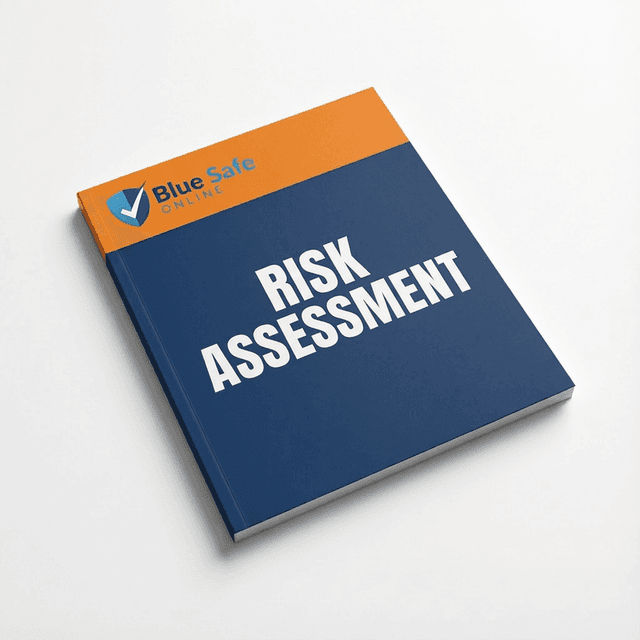
Steel Fixing Reinforcement and Post-Tensioning Risk Assessment
- 100% Compliant with Australian WHS Acts & Regulations
- Fully Editable MS Word & PDF Formats Included
- Pre-filled Content – Ready to Deploy Immediately
- Customisable – Easily Add Your Logo & Site Details
- Includes 2 Years of Free Compliance Updates
Two Ways to Get Started
Upload your logo and company details — we'll customise all your documents automatically.
Download the Word template and edit directly.
Product Overview
Identify and control organisational risks associated with Steel Fixing Reinforcement and Post-Tensioning through a structured, management-level WHS Risk Management approach that supports planning, governance and resource allocation. This Risk Assessment helps demonstrate Due Diligence under the WHS Act, reducing operational liability and strengthening your organisation’s safety management system.
Risk Categories & Hazards Covered
This document assesses risks and outlines management controls for:
- WHS Management, Governance and Legal Compliance: Assessment of executive due diligence, safety leadership, consultation, and the integration of steel fixing and post-tensioning risks into the broader WHS management system.
- Design, Engineering and Constructability Management: Management of design coordination, buildability reviews, post-tensioning design assumptions, and engineering controls to minimise structural and installation risks.
- Supplier, Fabrication and Material Quality Management: Controls for pre-qualification of suppliers, material certification, traceability of reinforcement and tendons, and inspection regimes for quality and compliance.
- Contractor Prequalification, Competency and Training: Assessment of contractor selection, licensing, verification of competency for steel fixing and PT operations, and ongoing training and supervision requirements.
- Planning, Scheduling and Work Interface Management: Management of staging, sequencing, and interfaces with formwork, concrete, and other trades to prevent clashes, delays and elevated risk conditions.
- Site Layout, Access and Egress for Steel Fixing and PT Work: Planning of work zones, access routes, working platforms, edge protection and safe egress for personnel involved in reinforcement and tensioning activities.
- Plant, Tools and Equipment Management for Tensioning and Fixing: Protocols for selection, inspection, maintenance and safe operation of stressing jacks, pumps, cutting tools and handling equipment.
- Structural Stability, Temporary Works and Stored Energy Control: Assessment of propping, bracing, temporary works design, and systems to control stored energy during stressing, de-tensioning and cutting operations.
- Impalement, Penetration and Exposed Re-Bar Risk Management: Controls for capping, guarding, segregation of work areas and supervision to manage impalement and penetration hazards from exposed reinforcement.
- Manual Handling, Ergonomics and Musculoskeletal Risk Controls: Management of lifting, carrying, tying and positioning reinforcement and tendons, including mechanical aids, team lifts and ergonomic work methods.
- Environmental Conditions, Fatigue and Occupational Health: Assessment of heat, cold, wind, noise, vibration, fatigue, and other occupational health factors affecting steel fixing and PT crews.
- Traffic, Deliveries and Material Handling Logistics: Planning for delivery scheduling, craneage, vehicle movements, laydown areas and internal logistics to minimise interaction between people, plant and materials.
- Documentation, Inspections, Testing and Verification: Systems for ITPs, hold points, stressing records, material test certificates and verification of installation against design and specification.
- Emergency Preparedness, Incident Response and Learning: Protocols for rescue, emergency isolation of equipment, incident reporting, investigation and continuous improvement in steel fixing and post-tensioning operations.
Who is this for?
This Risk Assessment is designed for Business Owners, Construction Managers, Project Engineers and Safety Managers responsible for planning, overseeing and governing Steel Fixing Reinforcement and Post-Tensioning activities on construction projects.
Hazards & Risks Covered
| Hazard | Risk Description |
|---|---|
| 1. WHS Management, Governance and Legal Compliance |
|
| 2. Design, Engineering and Constructability Management |
|
| 3. Supplier, Fabrication and Material Quality Management |
|
| 4. Contractor Prequalification, Competency and Training |
|
| 5. Planning, Scheduling and Work Interface Management |
|
| 6. Site Layout, Access and Egress for Steel Fixing and PT Work |
|
| 7. Plant, Tools and Equipment Management for Tensioning and Fixing |
|
| 8. Structural Stability, Temporary Works and Stored Energy Control |
|
| 9. Impalement, Penetration and Exposed Re-Bar Risk Management |
|
| 10. Manual Handling, Ergonomics and Musculoskeletal Risk Controls |
|
| 11. Environmental Conditions, Fatigue and Occupational Health |
|
| 12. Traffic, Deliveries and Material Handling Logistics |
|
| 13. Documentation, Inspections, Testing and Verification |
|
| 14. Emergency Preparedness, Incident Response and Learning |
|
Need to add specific hazards for your workplace?
Don't worry if a specific hazard isn't listed above. Once you purchase, simply log in to your Client Portal and add your own custom hazards at no extra cost. We take care of the hard work—creating the risk ratings and control measures for free—to ensure your document is compliant within minutes.
Legislation & References
This document was researched and developed to align with:
- Work Health and Safety Act 2011
- Work Health and Safety Regulations 2017
- AS/NZS ISO 31000:2018: Risk management — Guidelines
- AS/NZS 4801 / ISO 45001: Occupational health and safety management systems — Requirements for implementation of systematic WHS management.
- AS 3600 Concrete Structures: Requirements for the design and construction of reinforced and post-tensioned concrete structures.
- AS/NZS 4671 Steel Reinforcing Materials: Specifications for reinforcing steel used in concrete construction.
- AS 1314 / AS 1311 Prestressing Materials: Standards for prestressing tendons, anchorage systems and related components.
- Safe Work Australia – Code of Practice: Construction Work: Guidance on managing WHS risks specific to construction activities.
- Safe Work Australia – Code of Practice: Managing the Risk of Falls at Workplaces: Controls for work at height during steel fixing and PT operations.
- Safe Work Australia – Code of Practice: Managing Risks of Plant in the Workplace: Requirements for safe selection, use and maintenance of stressing jacks, lifting equipment and associated plant.
- Safe Work Australia – Code of Practice: Hazardous Manual Tasks: Guidance on managing musculoskeletal risks associated with reinforcement and tendon handling.
Standard Risk Assessment Features (Click to Expand)
- Comprehensive hazard identification for all activities
- Risk rating matrix with likelihood and consequence analysis
- Existing control measures evaluation
- Residual risk assessment after controls
- Hierarchy of controls recommendations
- Action priority rankings
- Review and monitoring requirements
- Consultation and communication records
- Legal compliance references
- Sign-off and approval sections
Suitable for Industries
$79.5
Includes all formats + 2 years updates
Steel Fixing Reinforcement and Post-Tensioning Risk Assessment
- • 100% Compliant with Australian WHS Acts & Regulations
- • Fully Editable MS Word & PDF Formats Included
- • Pre-filled Content – Ready to Deploy Immediately
- • Customisable – Easily Add Your Logo & Site Details
- • Includes 2 Years of Free Compliance Updates
Steel Fixing Reinforcement and Post-Tensioning Risk Assessment
Product Overview
Identify and control organisational risks associated with Steel Fixing Reinforcement and Post-Tensioning through a structured, management-level WHS Risk Management approach that supports planning, governance and resource allocation. This Risk Assessment helps demonstrate Due Diligence under the WHS Act, reducing operational liability and strengthening your organisation’s safety management system.
Risk Categories & Hazards Covered
This document assesses risks and outlines management controls for:
- WHS Management, Governance and Legal Compliance: Assessment of executive due diligence, safety leadership, consultation, and the integration of steel fixing and post-tensioning risks into the broader WHS management system.
- Design, Engineering and Constructability Management: Management of design coordination, buildability reviews, post-tensioning design assumptions, and engineering controls to minimise structural and installation risks.
- Supplier, Fabrication and Material Quality Management: Controls for pre-qualification of suppliers, material certification, traceability of reinforcement and tendons, and inspection regimes for quality and compliance.
- Contractor Prequalification, Competency and Training: Assessment of contractor selection, licensing, verification of competency for steel fixing and PT operations, and ongoing training and supervision requirements.
- Planning, Scheduling and Work Interface Management: Management of staging, sequencing, and interfaces with formwork, concrete, and other trades to prevent clashes, delays and elevated risk conditions.
- Site Layout, Access and Egress for Steel Fixing and PT Work: Planning of work zones, access routes, working platforms, edge protection and safe egress for personnel involved in reinforcement and tensioning activities.
- Plant, Tools and Equipment Management for Tensioning and Fixing: Protocols for selection, inspection, maintenance and safe operation of stressing jacks, pumps, cutting tools and handling equipment.
- Structural Stability, Temporary Works and Stored Energy Control: Assessment of propping, bracing, temporary works design, and systems to control stored energy during stressing, de-tensioning and cutting operations.
- Impalement, Penetration and Exposed Re-Bar Risk Management: Controls for capping, guarding, segregation of work areas and supervision to manage impalement and penetration hazards from exposed reinforcement.
- Manual Handling, Ergonomics and Musculoskeletal Risk Controls: Management of lifting, carrying, tying and positioning reinforcement and tendons, including mechanical aids, team lifts and ergonomic work methods.
- Environmental Conditions, Fatigue and Occupational Health: Assessment of heat, cold, wind, noise, vibration, fatigue, and other occupational health factors affecting steel fixing and PT crews.
- Traffic, Deliveries and Material Handling Logistics: Planning for delivery scheduling, craneage, vehicle movements, laydown areas and internal logistics to minimise interaction between people, plant and materials.
- Documentation, Inspections, Testing and Verification: Systems for ITPs, hold points, stressing records, material test certificates and verification of installation against design and specification.
- Emergency Preparedness, Incident Response and Learning: Protocols for rescue, emergency isolation of equipment, incident reporting, investigation and continuous improvement in steel fixing and post-tensioning operations.
Who is this for?
This Risk Assessment is designed for Business Owners, Construction Managers, Project Engineers and Safety Managers responsible for planning, overseeing and governing Steel Fixing Reinforcement and Post-Tensioning activities on construction projects.
Hazards & Risks Covered
| Hazard | Risk Description |
|---|---|
| 1. WHS Management, Governance and Legal Compliance |
|
| 2. Design, Engineering and Constructability Management |
|
| 3. Supplier, Fabrication and Material Quality Management |
|
| 4. Contractor Prequalification, Competency and Training |
|
| 5. Planning, Scheduling and Work Interface Management |
|
| 6. Site Layout, Access and Egress for Steel Fixing and PT Work |
|
| 7. Plant, Tools and Equipment Management for Tensioning and Fixing |
|
| 8. Structural Stability, Temporary Works and Stored Energy Control |
|
| 9. Impalement, Penetration and Exposed Re-Bar Risk Management |
|
| 10. Manual Handling, Ergonomics and Musculoskeletal Risk Controls |
|
| 11. Environmental Conditions, Fatigue and Occupational Health |
|
| 12. Traffic, Deliveries and Material Handling Logistics |
|
| 13. Documentation, Inspections, Testing and Verification |
|
| 14. Emergency Preparedness, Incident Response and Learning |
|
Need to add specific hazards for your workplace?
Don't worry if a specific hazard isn't listed above. Once you purchase, simply log in to your Client Portal and add your own custom hazards at no extra cost. We take care of the hard work—creating the risk ratings and control measures for free—to ensure your document is compliant within minutes.
Legislation & References
This document was researched and developed to align with:
- Work Health and Safety Act 2011
- Work Health and Safety Regulations 2017
- AS/NZS ISO 31000:2018: Risk management — Guidelines
- AS/NZS 4801 / ISO 45001: Occupational health and safety management systems — Requirements for implementation of systematic WHS management.
- AS 3600 Concrete Structures: Requirements for the design and construction of reinforced and post-tensioned concrete structures.
- AS/NZS 4671 Steel Reinforcing Materials: Specifications for reinforcing steel used in concrete construction.
- AS 1314 / AS 1311 Prestressing Materials: Standards for prestressing tendons, anchorage systems and related components.
- Safe Work Australia – Code of Practice: Construction Work: Guidance on managing WHS risks specific to construction activities.
- Safe Work Australia – Code of Practice: Managing the Risk of Falls at Workplaces: Controls for work at height during steel fixing and PT operations.
- Safe Work Australia – Code of Practice: Managing Risks of Plant in the Workplace: Requirements for safe selection, use and maintenance of stressing jacks, lifting equipment and associated plant.
- Safe Work Australia – Code of Practice: Hazardous Manual Tasks: Guidance on managing musculoskeletal risks associated with reinforcement and tendon handling.
Standard Risk Assessment Features (Click to Expand)
- Comprehensive hazard identification for all activities
- Risk rating matrix with likelihood and consequence analysis
- Existing control measures evaluation
- Residual risk assessment after controls
- Hierarchy of controls recommendations
- Action priority rankings
- Review and monitoring requirements
- Consultation and communication records
- Legal compliance references
- Sign-off and approval sections
$79.5