

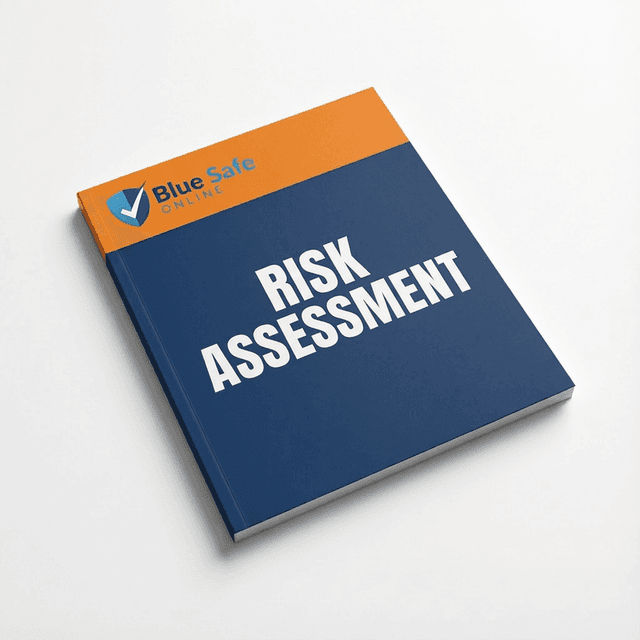
Roadworks Kerbing and Ground Stabilization Risk Assessment
- 100% Compliant with Australian WHS Acts & Regulations
- Fully Editable MS Word & PDF Formats Included
- Pre-filled Content – Ready to Deploy Immediately
- Customisable – Easily Add Your Logo & Site Details
- Includes 2 Years of Free Compliance Updates
Two Ways to Get Started
Upload your logo and company details — we'll customise all your documents automatically.
Download the Word template and edit directly.
Product Overview
Identify and control organisational risks associated with Roadworks Kerbing and Ground Stabilization through a structured, management-level WHS Risk Management framework. This Risk Assessment supports compliance with the WHS Act, demonstrates Due Diligence, and helps protect your business from operational and legal liability across civil construction projects.
Risk Categories & Hazards Covered
This document assesses risks and outlines management controls for:
- WHS Governance, Roles and Consultation: Assessment of leadership responsibilities, PCBU obligations, consultation arrangements, and safety committee structures for kerbing and ground stabilisation works.
- Design, Engineering and Constructability Management: Management of design risk reviews, geotechnical inputs, constructability assessments, and engineering controls embedded prior to site mobilisation.
- Project Planning, Programming and Sequencing: Evaluation of staging, interfaces between work fronts, critical path activities, and change management processes to minimise concurrent work conflicts.
- Contractor, Subcontractor and Supplier Management: Protocols for pre-qualification, scope definition, safety requirements in contracts, and performance monitoring of external parties involved in roadworks kerbing and stabilisation.
- Competency, Training and Supervision Systems: Assessment of licences, VOCs, site inductions, toolbox talks, and supervision arrangements for plant operators, traffic controllers, and ground crews.
- Geotechnical Risk and Ground Stability Management: Management of excavation stability, subsidence, soft spots, compaction quality, and erosion controls in varying soil and groundwater conditions.
- Traffic Interface and Road Corridor Management: Controls for live traffic environments, temporary traffic management plans, pedestrian interfaces, and protection from third-party vehicle movements.
- Plant, Equipment and Maintenance Systems: Assessment of selection, inspection, and maintenance of rollers, excavators, compactors, kerbing machines, and small plant used in stabilisation activities.
- Materials, Chemicals and Environmental Conditions Management: Management of cementitious products, stabilising agents, dust, noise, vibration, weather exposure, and environmental protection measures.
- Work at Height, Access and Edge Protection Systems: Evaluation of controls for work near open excavations, embankments, culverts, and retaining structures, including access ways and barriers.
- Fatigue, Rostering and Remote/Isolated Work Management: Assessment of shift patterns, night works, travel time, lone work arrangements, and communication systems for dispersed roadwork locations.
- Health Monitoring, Welfare and Psychosocial Risk Management: Protocols for exposure monitoring (e.g. dust, noise, vibration), amenities, hydration, heat stress, and management of psychosocial hazards.
- Emergency Preparedness, Incident Management and Recovery: Planning for vehicle and plant incidents, ground collapse, service strikes, medical emergencies, and business continuity following major events.
- Document Control, Record Keeping and Continuous Improvement: Systems for version control, audit trails, corrective actions, lessons learned, and ongoing review of roadworks kerbing and stabilisation risk controls.
Who is this for?
This Risk Assessment is designed for Business Owners, Civil Construction Managers, Project Managers, and Safety Professionals responsible for planning and overseeing roadworks kerbing and ground stabilisation operations.
Hazards & Risks Covered
| Hazard | Risk Description |
|---|---|
| 1. WHS Governance, Roles and Consultation |
|
| 2. Design, Engineering and Constructability Management |
|
| 3. Project Planning, Programming and Sequencing |
|
| 4. Contractor, Subcontractor and Supplier Management |
|
| 5. Competency, Training and Supervision Systems |
|
| 6. Geotechnical Risk and Ground Stability Management |
|
| 7. Traffic Interface and Road Corridor Management |
|
| 8. Plant, Equipment and Maintenance Systems |
|
| 9. Materials, Chemicals and Environmental Conditions Management |
|
| 10. Work at Height, Access and Edge Protection Systems |
|
| 11. Fatigue, Rostering and Remote/Isolated Work Management |
|
| 12. Health Monitoring, Welfare and Psychosocial Risk Management |
|
| 13. Emergency Preparedness, Incident Management and Recovery |
|
| 14. Document Control, Record Keeping and Continuous Improvement |
|
Need to add specific hazards for your workplace?
Don't worry if a specific hazard isn't listed above. Once you purchase, simply log in to your Client Portal and add your own custom hazards at no extra cost. We take care of the hard work—creating the risk ratings and control measures for free—to ensure your document is compliant within minutes.
Legislation & References
This document was researched and developed to align with:
- Work Health and Safety Act 2011
- Work Health and Safety Regulations 2017
- AS/NZS ISO 31000:2018: Risk management — Guidelines
- Safe Work Australia – Code of Practice: How to Manage Work Health and Safety Risks: Guidance on systematic risk management processes.
- Safe Work Australia – Code of Practice: Construction Work: Requirements for managing WHS in construction, including civil roadworks activities.
- Safe Work Australia – Code of Practice: Excavation Work: Controls for ground stability, trenching, and excavation hazards.
- Safe Work Australia – Code of Practice: Managing the Risk of Plant in the Workplace: Selection, use, and maintenance of construction plant and equipment.
- Safe Work Australia – Code of Practice: Managing Noise and Preventing Hearing Loss at Work: Requirements for noise exposure associated with road construction plant.
- Safe Work Australia – Code of Practice: Hazardous Manual Tasks: Management of manual handling associated with kerbing and materials handling.
- Safe Work Australia – Code of Practice: Managing Risks of Hazardous Chemicals in the Workplace: Controls for stabilising agents, fuels, and other hazardous substances.
- AS 1742 – Manual of Uniform Traffic Control Devices (series): Standards for temporary traffic management and roadwork signage.
- AS/NZS 4801 (superseded) / ISO 45001:2018: Occupational health and safety management systems — requirements and guidance for implementation.
Standard Risk Assessment Features (Click to Expand)
- Comprehensive hazard identification for all activities
- Risk rating matrix with likelihood and consequence analysis
- Existing control measures evaluation
- Residual risk assessment after controls
- Hierarchy of controls recommendations
- Action priority rankings
- Review and monitoring requirements
- Consultation and communication records
- Legal compliance references
- Sign-off and approval sections
Suitable for Industries
$79.5
Includes all formats + 2 years updates
Roadworks Kerbing and Ground Stabilization Risk Assessment
- • 100% Compliant with Australian WHS Acts & Regulations
- • Fully Editable MS Word & PDF Formats Included
- • Pre-filled Content – Ready to Deploy Immediately
- • Customisable – Easily Add Your Logo & Site Details
- • Includes 2 Years of Free Compliance Updates
Roadworks Kerbing and Ground Stabilization Risk Assessment
Product Overview
Identify and control organisational risks associated with Roadworks Kerbing and Ground Stabilization through a structured, management-level WHS Risk Management framework. This Risk Assessment supports compliance with the WHS Act, demonstrates Due Diligence, and helps protect your business from operational and legal liability across civil construction projects.
Risk Categories & Hazards Covered
This document assesses risks and outlines management controls for:
- WHS Governance, Roles and Consultation: Assessment of leadership responsibilities, PCBU obligations, consultation arrangements, and safety committee structures for kerbing and ground stabilisation works.
- Design, Engineering and Constructability Management: Management of design risk reviews, geotechnical inputs, constructability assessments, and engineering controls embedded prior to site mobilisation.
- Project Planning, Programming and Sequencing: Evaluation of staging, interfaces between work fronts, critical path activities, and change management processes to minimise concurrent work conflicts.
- Contractor, Subcontractor and Supplier Management: Protocols for pre-qualification, scope definition, safety requirements in contracts, and performance monitoring of external parties involved in roadworks kerbing and stabilisation.
- Competency, Training and Supervision Systems: Assessment of licences, VOCs, site inductions, toolbox talks, and supervision arrangements for plant operators, traffic controllers, and ground crews.
- Geotechnical Risk and Ground Stability Management: Management of excavation stability, subsidence, soft spots, compaction quality, and erosion controls in varying soil and groundwater conditions.
- Traffic Interface and Road Corridor Management: Controls for live traffic environments, temporary traffic management plans, pedestrian interfaces, and protection from third-party vehicle movements.
- Plant, Equipment and Maintenance Systems: Assessment of selection, inspection, and maintenance of rollers, excavators, compactors, kerbing machines, and small plant used in stabilisation activities.
- Materials, Chemicals and Environmental Conditions Management: Management of cementitious products, stabilising agents, dust, noise, vibration, weather exposure, and environmental protection measures.
- Work at Height, Access and Edge Protection Systems: Evaluation of controls for work near open excavations, embankments, culverts, and retaining structures, including access ways and barriers.
- Fatigue, Rostering and Remote/Isolated Work Management: Assessment of shift patterns, night works, travel time, lone work arrangements, and communication systems for dispersed roadwork locations.
- Health Monitoring, Welfare and Psychosocial Risk Management: Protocols for exposure monitoring (e.g. dust, noise, vibration), amenities, hydration, heat stress, and management of psychosocial hazards.
- Emergency Preparedness, Incident Management and Recovery: Planning for vehicle and plant incidents, ground collapse, service strikes, medical emergencies, and business continuity following major events.
- Document Control, Record Keeping and Continuous Improvement: Systems for version control, audit trails, corrective actions, lessons learned, and ongoing review of roadworks kerbing and stabilisation risk controls.
Who is this for?
This Risk Assessment is designed for Business Owners, Civil Construction Managers, Project Managers, and Safety Professionals responsible for planning and overseeing roadworks kerbing and ground stabilisation operations.
Hazards & Risks Covered
| Hazard | Risk Description |
|---|---|
| 1. WHS Governance, Roles and Consultation |
|
| 2. Design, Engineering and Constructability Management |
|
| 3. Project Planning, Programming and Sequencing |
|
| 4. Contractor, Subcontractor and Supplier Management |
|
| 5. Competency, Training and Supervision Systems |
|
| 6. Geotechnical Risk and Ground Stability Management |
|
| 7. Traffic Interface and Road Corridor Management |
|
| 8. Plant, Equipment and Maintenance Systems |
|
| 9. Materials, Chemicals and Environmental Conditions Management |
|
| 10. Work at Height, Access and Edge Protection Systems |
|
| 11. Fatigue, Rostering and Remote/Isolated Work Management |
|
| 12. Health Monitoring, Welfare and Psychosocial Risk Management |
|
| 13. Emergency Preparedness, Incident Management and Recovery |
|
| 14. Document Control, Record Keeping and Continuous Improvement |
|
Need to add specific hazards for your workplace?
Don't worry if a specific hazard isn't listed above. Once you purchase, simply log in to your Client Portal and add your own custom hazards at no extra cost. We take care of the hard work—creating the risk ratings and control measures for free—to ensure your document is compliant within minutes.
Legislation & References
This document was researched and developed to align with:
- Work Health and Safety Act 2011
- Work Health and Safety Regulations 2017
- AS/NZS ISO 31000:2018: Risk management — Guidelines
- Safe Work Australia – Code of Practice: How to Manage Work Health and Safety Risks: Guidance on systematic risk management processes.
- Safe Work Australia – Code of Practice: Construction Work: Requirements for managing WHS in construction, including civil roadworks activities.
- Safe Work Australia – Code of Practice: Excavation Work: Controls for ground stability, trenching, and excavation hazards.
- Safe Work Australia – Code of Practice: Managing the Risk of Plant in the Workplace: Selection, use, and maintenance of construction plant and equipment.
- Safe Work Australia – Code of Practice: Managing Noise and Preventing Hearing Loss at Work: Requirements for noise exposure associated with road construction plant.
- Safe Work Australia – Code of Practice: Hazardous Manual Tasks: Management of manual handling associated with kerbing and materials handling.
- Safe Work Australia – Code of Practice: Managing Risks of Hazardous Chemicals in the Workplace: Controls for stabilising agents, fuels, and other hazardous substances.
- AS 1742 – Manual of Uniform Traffic Control Devices (series): Standards for temporary traffic management and roadwork signage.
- AS/NZS 4801 (superseded) / ISO 45001:2018: Occupational health and safety management systems — requirements and guidance for implementation.
Standard Risk Assessment Features (Click to Expand)
- Comprehensive hazard identification for all activities
- Risk rating matrix with likelihood and consequence analysis
- Existing control measures evaluation
- Residual risk assessment after controls
- Hierarchy of controls recommendations
- Action priority rankings
- Review and monitoring requirements
- Consultation and communication records
- Legal compliance references
- Sign-off and approval sections
$79.5