

Gantry Crane SWMS
This SWMS covers gantry crane work from lift planning and area setup to lifting, landing, shutdown and housekeeping.
Activities covered include
- Review the lift scope, load details and proposed lifting method
- Confirm clear communication arrangements for the lift
- Complete shutdown, housekeeping and relevant records
Download immediately
Your editable Word and PDF files are ready to download after purchase.
Acceptance guaranteed
If your client or principal requests changes during document review, BlueSafe will help revise the document at no extra cost and support resubmission until it is accepted.
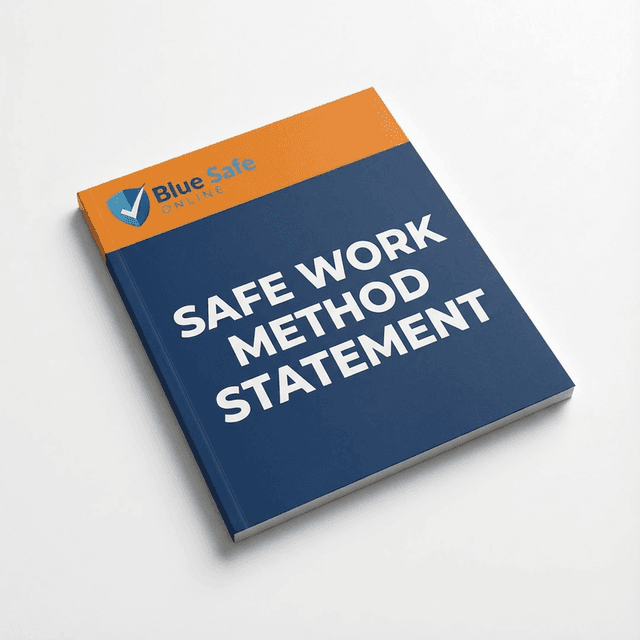
- 100% Compliant with Australian WHS Acts & Regulations
- Fully Editable MS Word & PDF Formats Included
- Pre-filled Content - Ready to Deploy Immediately
- Customisable - Easily Add Your Logo & Site Details
- Includes 2 Years of Free Compliance Updates
Product Overview
This SWMS covers gantry crane work from lift planning and area setup to lifting, landing, shutdown and housekeeping. It supports the management of risks associated with loads, lifting gear, crane movement, communications, access and equipment condition.
Activities & Specific Tasks Covered
This document includes task-specific risk controls for:
- Review the lift scope, load details and proposed lifting method
- Set up an area that manages access and interaction around lifting work
- Check the crane travel area, visibility and possible obstructions
- Inspect the crane, controls and lifting gear before use
- Sling, balance and secure loads for lifting
- Confirm clear communication arrangements for the lift
- Lift and travel loads while managing movement, clearance and load control
- Land loads and disconnect lifting gear at the destination
- Coordinate work where multiple cranes may operate
- Isolate the crane for maintenance activities
- Complete shutdown, housekeeping and relevant records
Who is this for?
Suitable for contractors, workers, supervisors and businesses involved in gantry crane lifting activities.
Specific Job Steps & Hazards Covered
| Job Step / Activity | Potential Hazards |
|---|---|
| Review lift scope |
|
| Set up work area |
|
| Check crane environment |
|
| Inspect crane and controls |
|
| Inspect lifting gear |
|
| Sling and secure load |
|
| Confirm communications |
|
| Lift and travel load |
|
| Land and disconnect load |
|
| Manage multiple crane operations |
|
| Isolate for maintenance |
|
| Complete shutdown and housekeeping |
|
Need to add specific site requirements?
Use the BlueSafe Portal to tailor this SWMS with site-specific details, job steps, hazards, controls and responsibilities before work starts.
Acceptance Guaranteed: If your client or principal requests changes during document review, BlueSafe will help revise the document at no extra cost and support resubmission until it is accepted.
Legislation & References
The template includes references relevant to the documented work, including:
- Applicable Commonwealth, state or territory WHS/OHS legislation and regulations, including duties to manage risks, provide safe plant, training, supervision, consultation, plant inspection and maintenance, and control risks from lifting and suspended loads.
- Model Code of Practice: Managing the Risks of Plant in the Workplace (2022) — guidance on plant risk management, lifting attachments, safe working limits, maintenance and review of controls.
- Model Code of Practice: Construction Work (2024) — guidance on SWMS preparation, worker consultation, supervision, exclusion zones and traffic management where gantry crane work is construction work.
- Model Code of Practice: Managing the Risk of Falls at Workplaces — guidance where workers access crane structures, elevated runways or maintenance platforms.
- AS 1418.3 Cranes — Bridge, gantry and portal boom cranes.
- AS 2550.1 Cranes — Safe use, Part 1: General requirements.
- AS 2550.3 Cranes — Safe use, Part 3: Bridge, gantry and portal boom cranes.
- AS 4991 Lifting devices.
- AS 3775.2 Chain slings — Grade T — Care and use; AS 2759 Steel wire rope — Use, operation and maintenance; AS 1353.2 Flat synthetic-webbing slings — Care and use; AS 4497.2 Round slings — Synthetic fibre — Care and use.
- High Risk Work licensing guidance: bridge and gantry crane operation may require a CB licence; dogging and relevant rigging work require the appropriate HRW licence.
Standard SWMS Features (Click to Expand)
- Task-specific job steps, hazards and control measures
- Initial and residual risk ratings
- Assigned responsible persons for each job step
- Plant, equipment and PPE requirements where applicable
- Permits, qualifications and high-risk construction work details where applicable
- Worker consultation, sign-off and review sections
Suitable for Industries
Related templates
$79.50
$96.80
Includes all formats + 2 years updates
Acceptance guaranteed
If your client or principal requests changes during document review, BlueSafe will help revise the document at no extra cost and support resubmission until it is accepted.
$79.50
$96.80
One-time payment