

Animal Transport and Livestock Loading Risk Assessment
This risk assessment covers animal transport and livestock loading activities, including site preparation, vehicle movements, livestock handling, loading, securing and incident response.
Activities covered include
- Assess the site, yard layout, weather, work roles and communication arrangements before starting
- Secure animals, gates and partitions while considering load distribution and vehicle stability
- Prepare for animal escape, vehicle movement, injuries and other incidents
Download immediately
Your editable Word and PDF files are ready to download after purchase.
Acceptance guaranteed
If your client or principal requests changes during document review, BlueSafe will help revise the document at no extra cost and support resubmission until it is accepted.
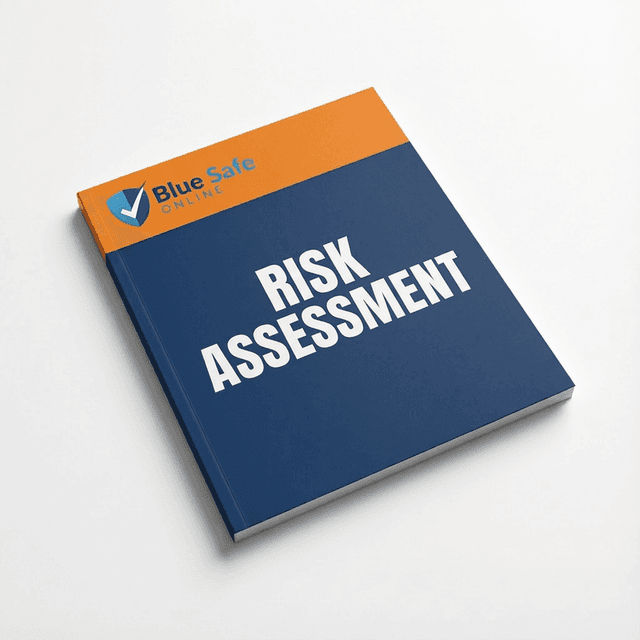
- 100% Compliant with Australian WHS Acts & Regulations
- Fully Editable MS Word & PDF Formats Included
- Pre-filled Content - Ready to Deploy Immediately
- Customisable - Easily Add Your Logo & Site Details
- Includes 2 Years of Free Compliance Updates
Product Overview
This risk assessment covers animal transport and livestock loading activities, including site preparation, vehicle movements, livestock handling, loading, securing and incident response. It supports planning and risk management by addressing interactions between animals, people, vehicles, equipment and changing site conditions.
Activities & Risks Covered
This assessment addresses activities and risks including:
- Assess the site, yard layout, weather, work roles and communication arrangements before starting
- Position trucks, utes, trailers and other mobile plant while managing traffic movements
- Inspect vehicles, trailers, ramps, gates, latches, floors, partitions and restraints
- Move livestock through yards while managing unpredictable animal movement and manual tasks
- Load livestock using ramps, catwalks, access points and compartments
- Secure animals, gates and partitions while considering load distribution and vehicle stability
- Handle gates, panels, tools, hoses and other handling equipment
- Manage hygiene, contamination and exposure to animal-borne material
- Work safely in heat, dust, noise, mud, rain and fatigue-prone conditions
- Prepare for animal escape, vehicle movement, injuries and other incidents
Who is this for?
Suitable for contractors, workers, supervisors and businesses involved in animal transport and livestock loading activities.
Activities & Hazards Covered
| Activity | Potential Hazards |
|---|---|
| Pre-start planning and site assessment |
|
| Vehicle arrival, positioning and traffic movement |
|
| Inspection of truck, trailer, ramp and restraints |
|
| Livestock handling and movement through yards |
|
| Loading livestock onto ramps and into compartments |
|
| Securing animals, gates and load distribution |
|
| Manual tasks and use of handling equipment |
|
| Biosecurity, hygiene and zoonotic disease exposure |
|
| Environmental conditions, noise and fatigue |
|
| Emergencies, incidents and animal escape |
|
Need to tailor this risk assessment?
Use the BlueSafe Portal to add site-specific activities, hazards, controls, responsibilities and review details before the assessment is put into use.
Acceptance Guaranteed: If your client or principal requests changes during document review, BlueSafe will help revise the document at no extra cost and support resubmission until it is accepted.
Legislation & References
The template records model guidance used to inform the documented controls. Applicable WHS/OHS laws and adopted Codes vary by state or territory, so confirm the current local requirements when tailoring the assessment:
- Model guidance: Model Code of Practice: Managing the risk of fatigue at work — Provide sufficient breaks while at work; p. 30.
- Model guidance: Model Code of Practice: Hazardous manual tasks — 4.1 The hierarchy of control measures; p. 31.
- Model guidance: Model Code of Practice: Managing risks of plant in the workplace — Plant hazard identification — Traffic movements in the workplace; p. 17.
- Model guidance: Model Code of Practice: Work health and safety consultation, cooperation and coordination — 3. What is effective consultation?; p. 13.
- Model guidance: Model Code of Practice: First aid in the workplace — 3. First aid equipment, facilities and training; p. 12.
- Model guidance: Model Code of Practice: Managing the work environment and facilities — 2.8 Heat and cold; p. 21.
- Model guidance: Model Code of Practice: Managing noise and preventing hearing loss at work — 5. Controlling the risks; p. 29.
- Model guidance: Model Code of Practice: How to manage work health and safety risks — 4. Step 3 — How to control risks; p. 20.
- Model guidance: Model Code of Practice: Managing the risk of falls at workplaces — 3.2 Identifying the hazards; p. 16.
Standard Risk Assessment Features (Click to Expand)
- Activity-specific hazard identification and control measures
- Initial and residual risk ratings
- Assigned responsible persons for each activity
- Risk matrix and assessment classification
- Review, monitoring and sign-off fields
- Site-specific customisation before use
Suitable for Industries
Related templates
$79.50
Includes all formats + 2 years updates
Acceptance guaranteed
If your client or principal requests changes during document review, BlueSafe will help revise the document at no extra cost and support resubmission until it is accepted.
$79.50
One-time payment