

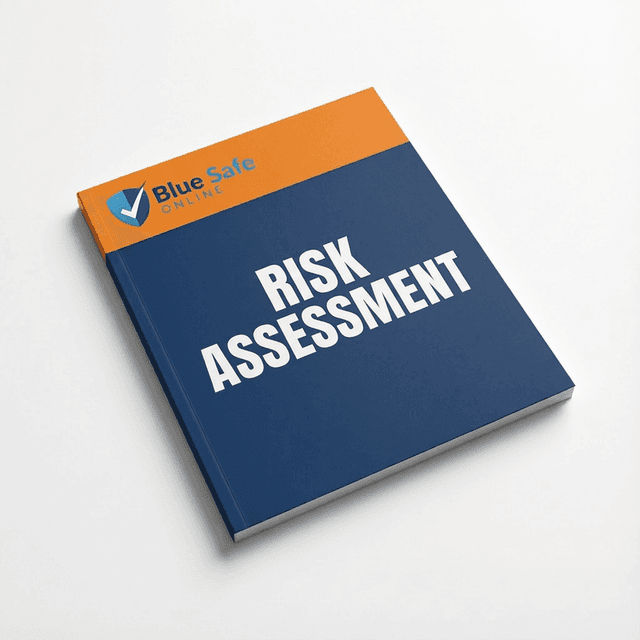
Glass Manufacturing Risk Assessment
- 100% Compliant with Australian WHS Acts & Regulations
- Fully Editable MS Word & PDF Formats Included
- Pre-filled Content – Ready to Deploy Immediately
- Customisable – Easily Add Your Logo & Site Details
- Includes 2 Years of Free Compliance Updates
Two Ways to Get Started
Upload your logo and company details — we'll customise all your documents automatically.
Download the Word template and edit directly.
Product Overview
Identify and control organisational risks associated with Glass Manufacturing through a structured, management-level WHS Risk Management approach that focuses on governance, systems, plant, and process controls. This Risk Assessment supports compliance with the Work Health and Safety Act and Regulations, helping to demonstrate Due Diligence and reduce operational liability across your glass manufacturing operations.
Risk Categories & Hazards Covered
This document assesses risks and outlines management controls for:
- WHS Governance, Legal Compliance & Consultation: Assessment of leadership responsibilities, consultation arrangements, safety committees, and processes to demonstrate ongoing compliance with WHS legislation in glass manufacturing.
- Risk Management Systems & Change Control: Management of formal risk assessment processes, change management for new products, equipment or layouts, and integration of risk controls into organisational procedures.
- Plant & Equipment Safety for Glass Forming & Tempering: Evaluation of guarding, interlocks, isolation, maintenance programs and safety controls for furnaces, forming lines, tempering ovens and associated machinery.
- Thermal Hazards & Furnace/Lehr Management: Assessment of high-temperature exposure, heat stress, refractory maintenance, burner systems, and protocols for start-up, shut-down and upset conditions.
- Hazardous Chemicals & Coating Systems Management: Management of chemical selection, storage, decanting, application systems, ventilation, Safety Data Sheet (SDS) controls and hazardous chemical registers.
- UV Curing, Adhesives & Bonding Systems: Controls for UV radiation exposure, adhesive selection, curing equipment safety, ventilation, and management of sensitisation and respiratory risks.
- Soldering, Metals & Stained Glass Processes: Assessment of lead and metal exposures, fume generation, soldering equipment safety, and hygiene controls for specialist and decorative glass operations.
- Manual Handling, Mechanical Handling & Storage of Glass: Management of lifting, carrying, and team handling of glass, use of mechanical aids, racking design, storage stability and traffic management.
- Glass Breakage, Flying Fragments & Product Integrity: Protocols for product quality controls, breakage management, guarding, PPE selection, and segregation of high-risk areas to minimise impact and shattering risks.
- Noise, Dust, Fumes & Environmental Conditions: Assessment of grinding, cutting and blasting processes, airborne contaminant controls, ventilation, noise exposure and housekeeping standards.
- Competency, Training & Licence Management: Systems for verifying operator competency, high-risk work licences, refresher training, and role-specific induction for glass manufacturing tasks.
- Safe Work Procedures, Permits & Documentation Control: Management of documented procedures, permit-to-work systems (e.g. hot work, confined spaces), document version control and communication of safety requirements.
- Emergency Preparedness, Fire Safety & First Aid: Planning for furnace and plant emergencies, fire detection and suppression systems, spill response, evacuation drills and first aid arrangements.
- Health Monitoring, Wellbeing & Fatigue Management: Oversight of health surveillance for noise, chemicals and heat, fatigue risk management, shift-work considerations and worker wellbeing programs.
- Contractor, Visitor & Supply Chain Safety: Controls for contractor induction and supervision, visitor access to production areas, supplier safety expectations and logistics interfaces.
Who is this for?
This Risk Assessment is designed for Business Owners, Operations Managers, Production Managers and Safety Professionals responsible for planning, overseeing and improving Glass Manufacturing operations and systems.
Hazards & Risks Covered
| Hazard | Risk Description |
|---|---|
| 1. WHS Governance, Legal Compliance & Consultation |
|
| 2. Risk Management Systems & Change Control |
|
| 3. Plant & Equipment Safety for Glass Forming & Tempering |
|
| 4. Thermal Hazards & Furnace/Lehr Management |
|
| 5. Hazardous Chemicals & Coating Systems Management |
|
| 6. UV Curing, Adhesives & Bonding Systems |
|
| 7. Soldering, Metals & Stained Glass Processes |
|
| 8. Manual Handling, Mechanical Handling & Storage of Glass |
|
| 9. Glass Breakage, Flying Fragments & Product Integrity |
|
| 10. Noise, Dust, Fumes & Environmental Conditions |
|
| 11. Competency, Training & Licence Management |
|
| 12. Safe Work Procedures, Permits & Documentation Control |
|
| 13. Emergency Preparedness, Fire Safety & First Aid |
|
| 14. Health Monitoring, Wellbeing & Fatigue Management |
|
| 15. Contractor, Visitor & Supply Chain Safety |
|
| 16. WHS Performance Monitoring, Reporting & Continuous Improvement |
|
Need to add specific hazards for your workplace?
Don't worry if a specific hazard isn't listed above. Once you purchase, simply log in to your Client Portal and add your own custom hazards at no extra cost. We take care of the hard work—creating the risk ratings and control measures for free—to ensure your document is compliant within minutes.
Legislation & References
This document was researched and developed to align with:
- Work Health and Safety Act 2011
- Work Health and Safety Regulations 2017
- Model Code of Practice – How to Manage Work Health and Safety Risks: Guidance on risk management principles and implementation.
- Model Code of Practice – Managing Risks of Plant in the Workplace: Requirements for plant design, guarding, operation and maintenance.
- Model Code of Practice – Managing Noise and Preventing Hearing Loss at Work: Controls for noise exposure from glass cutting, grinding and production lines.
- Model Code of Practice – Managing Risks of Hazardous Chemicals in the Workplace: Framework for chemical selection, storage, handling and record keeping.
- Model Code of Practice – Managing the Work Environment and Facilities: Requirements for ventilation, temperature, amenities and general workplace conditions.
- AS/NZS ISO 31000:2018: Risk management — Guidelines
- AS/NZS 4801 / ISO 45001: Occupational health and safety management systems — Requirements for systematic WHS management.
- AS 4024 Safety of Machinery (series): Standards for machinery safeguarding and control system safety relevant to glass manufacturing plant.
- AS/NZS 1715 & 1716: Selection, use and maintenance of respiratory protective equipment and performance requirements.
- AS/NZS 2161 (series): Occupational protective gloves for handling glass and sharp edges.
- AS 4775: Emergency eyewash and shower equipment for chemical and heat exposure risks.
Standard Risk Assessment Features (Click to Expand)
- Comprehensive hazard identification for all activities
- Risk rating matrix with likelihood and consequence analysis
- Existing control measures evaluation
- Residual risk assessment after controls
- Hierarchy of controls recommendations
- Action priority rankings
- Review and monitoring requirements
- Consultation and communication records
- Legal compliance references
- Sign-off and approval sections
Suitable for Industries
$79.5
Includes all formats + 2 years updates
Glass Manufacturing Risk Assessment
- • 100% Compliant with Australian WHS Acts & Regulations
- • Fully Editable MS Word & PDF Formats Included
- • Pre-filled Content – Ready to Deploy Immediately
- • Customisable – Easily Add Your Logo & Site Details
- • Includes 2 Years of Free Compliance Updates
Glass Manufacturing Risk Assessment
Product Overview
Identify and control organisational risks associated with Glass Manufacturing through a structured, management-level WHS Risk Management approach that focuses on governance, systems, plant, and process controls. This Risk Assessment supports compliance with the Work Health and Safety Act and Regulations, helping to demonstrate Due Diligence and reduce operational liability across your glass manufacturing operations.
Risk Categories & Hazards Covered
This document assesses risks and outlines management controls for:
- WHS Governance, Legal Compliance & Consultation: Assessment of leadership responsibilities, consultation arrangements, safety committees, and processes to demonstrate ongoing compliance with WHS legislation in glass manufacturing.
- Risk Management Systems & Change Control: Management of formal risk assessment processes, change management for new products, equipment or layouts, and integration of risk controls into organisational procedures.
- Plant & Equipment Safety for Glass Forming & Tempering: Evaluation of guarding, interlocks, isolation, maintenance programs and safety controls for furnaces, forming lines, tempering ovens and associated machinery.
- Thermal Hazards & Furnace/Lehr Management: Assessment of high-temperature exposure, heat stress, refractory maintenance, burner systems, and protocols for start-up, shut-down and upset conditions.
- Hazardous Chemicals & Coating Systems Management: Management of chemical selection, storage, decanting, application systems, ventilation, Safety Data Sheet (SDS) controls and hazardous chemical registers.
- UV Curing, Adhesives & Bonding Systems: Controls for UV radiation exposure, adhesive selection, curing equipment safety, ventilation, and management of sensitisation and respiratory risks.
- Soldering, Metals & Stained Glass Processes: Assessment of lead and metal exposures, fume generation, soldering equipment safety, and hygiene controls for specialist and decorative glass operations.
- Manual Handling, Mechanical Handling & Storage of Glass: Management of lifting, carrying, and team handling of glass, use of mechanical aids, racking design, storage stability and traffic management.
- Glass Breakage, Flying Fragments & Product Integrity: Protocols for product quality controls, breakage management, guarding, PPE selection, and segregation of high-risk areas to minimise impact and shattering risks.
- Noise, Dust, Fumes & Environmental Conditions: Assessment of grinding, cutting and blasting processes, airborne contaminant controls, ventilation, noise exposure and housekeeping standards.
- Competency, Training & Licence Management: Systems for verifying operator competency, high-risk work licences, refresher training, and role-specific induction for glass manufacturing tasks.
- Safe Work Procedures, Permits & Documentation Control: Management of documented procedures, permit-to-work systems (e.g. hot work, confined spaces), document version control and communication of safety requirements.
- Emergency Preparedness, Fire Safety & First Aid: Planning for furnace and plant emergencies, fire detection and suppression systems, spill response, evacuation drills and first aid arrangements.
- Health Monitoring, Wellbeing & Fatigue Management: Oversight of health surveillance for noise, chemicals and heat, fatigue risk management, shift-work considerations and worker wellbeing programs.
- Contractor, Visitor & Supply Chain Safety: Controls for contractor induction and supervision, visitor access to production areas, supplier safety expectations and logistics interfaces.
Who is this for?
This Risk Assessment is designed for Business Owners, Operations Managers, Production Managers and Safety Professionals responsible for planning, overseeing and improving Glass Manufacturing operations and systems.
Hazards & Risks Covered
| Hazard | Risk Description |
|---|---|
| 1. WHS Governance, Legal Compliance & Consultation |
|
| 2. Risk Management Systems & Change Control |
|
| 3. Plant & Equipment Safety for Glass Forming & Tempering |
|
| 4. Thermal Hazards & Furnace/Lehr Management |
|
| 5. Hazardous Chemicals & Coating Systems Management |
|
| 6. UV Curing, Adhesives & Bonding Systems |
|
| 7. Soldering, Metals & Stained Glass Processes |
|
| 8. Manual Handling, Mechanical Handling & Storage of Glass |
|
| 9. Glass Breakage, Flying Fragments & Product Integrity |
|
| 10. Noise, Dust, Fumes & Environmental Conditions |
|
| 11. Competency, Training & Licence Management |
|
| 12. Safe Work Procedures, Permits & Documentation Control |
|
| 13. Emergency Preparedness, Fire Safety & First Aid |
|
| 14. Health Monitoring, Wellbeing & Fatigue Management |
|
| 15. Contractor, Visitor & Supply Chain Safety |
|
| 16. WHS Performance Monitoring, Reporting & Continuous Improvement |
|
Need to add specific hazards for your workplace?
Don't worry if a specific hazard isn't listed above. Once you purchase, simply log in to your Client Portal and add your own custom hazards at no extra cost. We take care of the hard work—creating the risk ratings and control measures for free—to ensure your document is compliant within minutes.
Legislation & References
This document was researched and developed to align with:
- Work Health and Safety Act 2011
- Work Health and Safety Regulations 2017
- Model Code of Practice – How to Manage Work Health and Safety Risks: Guidance on risk management principles and implementation.
- Model Code of Practice – Managing Risks of Plant in the Workplace: Requirements for plant design, guarding, operation and maintenance.
- Model Code of Practice – Managing Noise and Preventing Hearing Loss at Work: Controls for noise exposure from glass cutting, grinding and production lines.
- Model Code of Practice – Managing Risks of Hazardous Chemicals in the Workplace: Framework for chemical selection, storage, handling and record keeping.
- Model Code of Practice – Managing the Work Environment and Facilities: Requirements for ventilation, temperature, amenities and general workplace conditions.
- AS/NZS ISO 31000:2018: Risk management — Guidelines
- AS/NZS 4801 / ISO 45001: Occupational health and safety management systems — Requirements for systematic WHS management.
- AS 4024 Safety of Machinery (series): Standards for machinery safeguarding and control system safety relevant to glass manufacturing plant.
- AS/NZS 1715 & 1716: Selection, use and maintenance of respiratory protective equipment and performance requirements.
- AS/NZS 2161 (series): Occupational protective gloves for handling glass and sharp edges.
- AS 4775: Emergency eyewash and shower equipment for chemical and heat exposure risks.
Standard Risk Assessment Features (Click to Expand)
- Comprehensive hazard identification for all activities
- Risk rating matrix with likelihood and consequence analysis
- Existing control measures evaluation
- Residual risk assessment after controls
- Hierarchy of controls recommendations
- Action priority rankings
- Review and monitoring requirements
- Consultation and communication records
- Legal compliance references
- Sign-off and approval sections
$79.5