

Food Processing SWMS
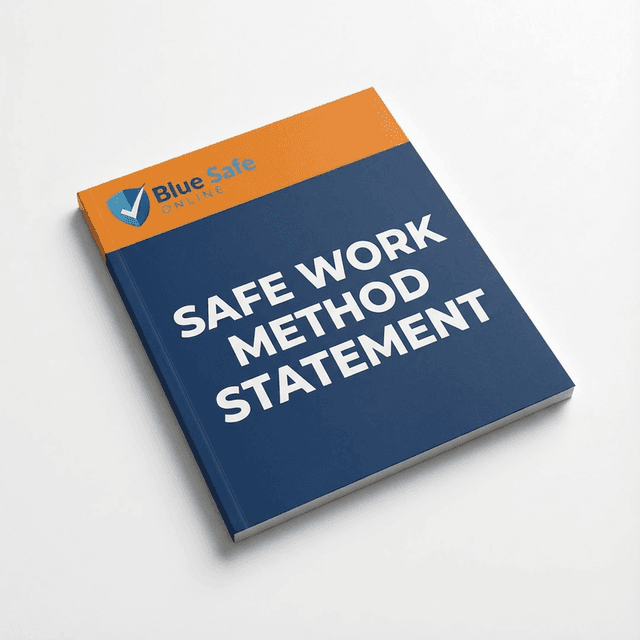
This SWMS covers food processing activities from pre-start setup and receiving materials through to plant operation, cleaning, waste removal and shutdown.
Activities covered include
- Complete pre-start briefing, set up work areas and coordinate production activities
- Operate and empty sausage-stuffing equipment
- Remove waste, maintain housekeeping and complete shutdown sign-off
Download immediately
Your editable Word and PDF files are ready to download after purchase.
Acceptance guaranteed
If your client or principal requests changes during document review, BlueSafe will help revise the document at no extra cost and support resubmission until it is accepted.
- 100% Compliant with Australian WHS Acts & Regulations
- Fully Editable MS Word & PDF Formats Included
- Pre-filled Content - Ready to Deploy Immediately
- Customisable - Easily Add Your Logo & Site Details
- Includes 2 Years of Free Compliance Updates
Product Overview
This SWMS covers food processing activities from pre-start setup and receiving materials through to plant operation, cleaning, waste removal and shutdown. It supports planning work sequences and managing hazards from machinery, sharp tools, heat, pressure, chemicals, biological exposure and moving loads.
Activities & Specific Tasks Covered
This document includes task-specific risk controls for:
- Complete pre-start briefing, set up work areas and coordinate production activities
- Receive materials and move loads while managing vehicle and pallet hazards
- Prepare and inspect plant before operation
- Handle animals and carry out stunning activities
- Process carcasses and manage cutting, biological and repetitive-task hazards
- Operate and empty sausage-stuffing equipment
- Operate roasting and retort cooking equipment
- Conduct meat quality testing and manage sharps, chemical and electrical hazards
- Clean and sanitise equipment while managing chemicals, wet floors and plant start-up
- Clear jams and maintain plant while controlling stored-energy hazards
- Remove waste, maintain housekeeping and complete shutdown sign-off
Who is this for?
Suitable for contractors, workers, supervisors and businesses carrying out food processing activities.
Specific Job Steps & Hazards Covered
| Job Step / Activity | Potential Hazards |
|---|---|
| Pre-start briefing and setup |
|
| Receive materials and move loads |
|
| Prepare and inspect plant |
|
| Handle animals and stun |
|
| Slaughter and butcher carcasses |
|
| Operate sausage stuffer |
|
| Empty sausage stuffer |
|
| Operate batch roasting oven |
|
| Operate retort cooker |
|
| Conduct meat quality tests |
|
| Clean and sanitise equipment |
|
| Clear jams and maintain plant |
|
| Waste removal and housekeeping |
|
| Shutdown and sign-off |
|
Need to add specific site requirements?
Use the BlueSafe Portal to tailor this SWMS with site-specific details, job steps, hazards, controls and responsibilities before work starts.
Acceptance Guaranteed: If your client or principal requests changes during document review, BlueSafe will help revise the document at no extra cost and support resubmission until it is accepted.
Legislation & References
The template includes references relevant to the documented work, including:
- Applicable Commonwealth, state or territory WHS/OHS legislation and regulations.
- Model Code of Practice: How to manage work health and safety risks (November 2024) — identify hazards, apply the hierarchy of controls and review controls.
- Model Code of Practice: Managing the risks of plant in the workplace (2021) — guarding, authorised operation, isolation, cleaning, maintenance and emergency procedures.
- Model Code of Practice: Managing the work environment and facilities (November 2024) — safe layout, floors, ventilation, lighting, temperature and workplace facilities.
- Model Code of Practice: Managing electrical risks in the workplace — electrical isolation, defect tagging and inspection/testing of electrical equipment.
- Model Code of Practice: Confined spaces — isolation and permit controls where enclosed plant entry is required.
- Model Code of Practice: Hazardous manual tasks.
- Model Code of Practice: Managing risks of hazardous chemicals in the workplace.
- Model Code of Practice: Managing psychosocial hazards at work.
- AS 4024 series Safety of machinery; AS 1210 Pressure vessels; AS/NZS 3788 Pressure equipment—In-service inspection; AS/NZS 3760 In-service safety inspection and testing of electrical equipment; AS/NZS 1715 and AS/NZS 1716 respiratory protection; AS/NZS 2161 protective gloves; AS/NZS 2210.3 safety footwear; AS/NZS 1270 hearing protectors; AS/NZS 1337.1 eye and face protection.
Standard SWMS Features (Click to Expand)
- Task-specific job steps, hazards and control measures
- Initial and residual risk ratings
- Assigned responsible persons for each job step
- Plant, equipment and PPE requirements where applicable
- Permits, qualifications and high-risk construction work details where applicable
- Worker consultation, sign-off and review sections
Suitable for Industries
Related templates
$79.50
$96.80
Includes all formats + 2 years updates
Acceptance guaranteed
If your client or principal requests changes during document review, BlueSafe will help revise the document at no extra cost and support resubmission until it is accepted.
$79.50
$96.80
One-time payment