

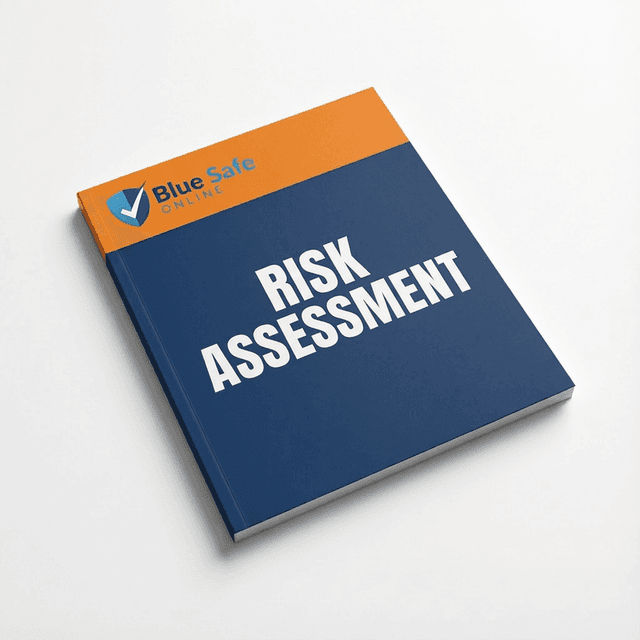
Fire Equipment Inspection Testing and Maintenance Risk Assessment
- 100% Compliant with Australian WHS Acts & Regulations
- Fully Editable MS Word & PDF Formats Included
- Pre-filled Content – Ready to Deploy Immediately
- Customisable – Easily Add Your Logo & Site Details
- Includes 2 Years of Free Compliance Updates
Two Ways to Get Started
Upload your logo and company details — we'll customise all your documents automatically.
Download the Word template and edit directly.
Product Overview
Identify and control organisational risks associated with Fire Equipment Inspection, Testing and Maintenance at a management and systems level, ensuring your fire safety program is robust, documented and defensible. This Risk Assessment supports WHS Act compliance, demonstrates executive Due Diligence and helps protect your business from operational liability and enforcement action.
Risk Categories & Hazards Covered
This document assesses risks and outlines management controls for:
- WHS Governance, Legal Compliance and PCBU Duties: Assessment of senior management responsibilities, duty of care, consultation, and resourcing for compliant fire equipment inspection, testing and maintenance activities.
- Fire Safety Policy, Procedures and Documentation Control: Management of fire safety policies, safe systems of work, version control, access to current procedures and integration with broader WHS management systems.
- Competency, Training and Licensing of Personnel: Evaluation of competency frameworks, licensing, refresher training, verification of competency and supervision for internal staff and external technicians.
- Contractor Management and Procurement of Fire Services: Governance of contractor selection, pre-qualification, scope definition, performance monitoring and WHS obligations for third‑party fire service providers.
- Asset Register, Design Information and Configuration Management: Control of fire system asset registers, as‑installed drawings, design criteria, system configuration and change history to ensure equipment remains fit for purpose.
- Inspection, Testing and Preventive Maintenance Regime: Structuring of inspection and testing schedules, maintenance frequencies, task planning and resource allocation in line with Australian Standards and manufacturer requirements.
- Defect Identification, Tag‑Out and Rectification Management: Protocols for defect reporting, isolation and tag‑out, risk ranking, interim controls, escalation pathways and timely rectification of non‑conformances.
- Emergency Egress, Exit Routes and Property Egress Audits: Assessment of egress route design, obstruction risks, inspection programs, signage, door hardware and integration with emergency evacuation procedures.
- Emergency Lighting and Exit Signage Management: Governance of emergency lighting and exit sign inspection, testing cycles, record keeping, failure response and replacement planning.
- Fire Detection, Alarm and Firefighter Interface Systems: Management of detection and alarm system performance, interface controls, impairment management, fault monitoring and coordination with attending fire services.
- Fire Pumps, Sprinklers, Tanks, Hydrants, Hose Reels and Suppression Systems: Oversight of critical suppression infrastructure including reliability, redundancy, water supply integrity, isolation controls and post‑maintenance reinstatement.
- Portable Fire Equipment Management: Control of selection, placement, inspection and maintenance of portable fire equipment such as extinguishers, hydrants and hose reels, including misuse and accessibility risks.
- Smoke Alarm and Residential‑Type Detector Management: Management of residential‑type smoke alarms and detectors, including lifecycle replacement, testing programs, tenant/occupant responsibilities and false alarm reduction.
- Change Management, Refurbishment and New Installations: Risk assessment of building changes, refurbishments and new fire system installations, including design review, commissioning, handover documentation and stakeholder communication.
- Monitoring, Audits, Reporting and Continuous Improvement: Establishment of monitoring programs, internal and external audits, KPI reporting, corrective actions and continual improvement of the fire safety management system.
Who is this for?
This Risk Assessment is designed for Business Owners, PCBUs, Facility Managers and Safety Managers responsible for planning, governing and auditing Fire Equipment Inspection, Testing and Maintenance across their operations.
Hazards & Risks Covered
| Hazard | Risk Description |
|---|---|
| 1. WHS Governance, Legal Compliance and PCBU Duties |
|
| 2. Fire Safety Policy, Procedures and Documentation Control |
|
| 3. Competency, Training and Licensing of Personnel |
|
| 4. Contractor Management and Procurement of Fire Services |
|
| 5. Asset Register, Design Information and Configuration Management |
|
| 6. Inspection, Testing and Preventive Maintenance Regime |
|
| 7. Defect Identification, Tag‑Out and Rectification Management |
|
| 8. Emergency Egress, Exit Routes and Property Egress Audits |
|
| 9. Emergency Lighting and Exit Signage Management |
|
| 10. Fire Detection, Alarm and Firefighter Interface Systems |
|
| 11. Fire Pumps, Sprinklers, Tanks, Hydrants, Hose Reels and Suppression Systems |
|
| 12. Portable Fire Equipment (Extinguishers, Hydrants, Hose Reels) Management |
|
| 13. Smoke Alarm and Residential‑Type Detector Management |
|
| 14. Change Management, Refurbishment and New Installations |
|
| 15. Monitoring, Audits, Reporting and Continuous Improvement |
|
| 16. Emergency Planning, Information, Training and Drills |
|
Need to add specific hazards for your workplace?
Don't worry if a specific hazard isn't listed above. Once you purchase, simply log in to your Client Portal and add your own custom hazards at no extra cost. We take care of the hard work—creating the risk ratings and control measures for free—to ensure your document is compliant within minutes.
Legislation & References
This document was researched and developed to align with:
- Work Health and Safety Act 2011
- Work Health and Safety Regulations 2017
- AS/NZS ISO 31000:2018: Risk management — Guidelines
- AS 1851: Routine service of fire protection systems and equipment
- AS 2293 (Series): Emergency escape lighting and exit signs for buildings
- AS 1670 (Series): Fire detection, warning, control and intercom systems
- AS 2419.1: Fire hydrant installations — System design, installation and commissioning
- AS 2444: Portable fire extinguishers and fire blankets — Selection and location
- AS 2118 (Series): Automatic fire sprinkler systems — Design, installation and commissioning
- AS 3786: Smoke alarms using scattered light, transmitted light or ionization
- AS/NZS 3013: Electrical installations — Classification of fire and mechanical performance of wiring system elements
- AS ISO 45001:2018: Occupational health and safety management systems — Requirements with guidance for use
Standard Risk Assessment Features (Click to Expand)
- Comprehensive hazard identification for all activities
- Risk rating matrix with likelihood and consequence analysis
- Existing control measures evaluation
- Residual risk assessment after controls
- Hierarchy of controls recommendations
- Action priority rankings
- Review and monitoring requirements
- Consultation and communication records
- Legal compliance references
- Sign-off and approval sections
Suitable for Industries
$79.5
Includes all formats + 2 years updates
Fire Equipment Inspection Testing and Maintenance Risk Assessment
- • 100% Compliant with Australian WHS Acts & Regulations
- • Fully Editable MS Word & PDF Formats Included
- • Pre-filled Content – Ready to Deploy Immediately
- • Customisable – Easily Add Your Logo & Site Details
- • Includes 2 Years of Free Compliance Updates
Fire Equipment Inspection Testing and Maintenance Risk Assessment
Product Overview
Identify and control organisational risks associated with Fire Equipment Inspection, Testing and Maintenance at a management and systems level, ensuring your fire safety program is robust, documented and defensible. This Risk Assessment supports WHS Act compliance, demonstrates executive Due Diligence and helps protect your business from operational liability and enforcement action.
Risk Categories & Hazards Covered
This document assesses risks and outlines management controls for:
- WHS Governance, Legal Compliance and PCBU Duties: Assessment of senior management responsibilities, duty of care, consultation, and resourcing for compliant fire equipment inspection, testing and maintenance activities.
- Fire Safety Policy, Procedures and Documentation Control: Management of fire safety policies, safe systems of work, version control, access to current procedures and integration with broader WHS management systems.
- Competency, Training and Licensing of Personnel: Evaluation of competency frameworks, licensing, refresher training, verification of competency and supervision for internal staff and external technicians.
- Contractor Management and Procurement of Fire Services: Governance of contractor selection, pre-qualification, scope definition, performance monitoring and WHS obligations for third‑party fire service providers.
- Asset Register, Design Information and Configuration Management: Control of fire system asset registers, as‑installed drawings, design criteria, system configuration and change history to ensure equipment remains fit for purpose.
- Inspection, Testing and Preventive Maintenance Regime: Structuring of inspection and testing schedules, maintenance frequencies, task planning and resource allocation in line with Australian Standards and manufacturer requirements.
- Defect Identification, Tag‑Out and Rectification Management: Protocols for defect reporting, isolation and tag‑out, risk ranking, interim controls, escalation pathways and timely rectification of non‑conformances.
- Emergency Egress, Exit Routes and Property Egress Audits: Assessment of egress route design, obstruction risks, inspection programs, signage, door hardware and integration with emergency evacuation procedures.
- Emergency Lighting and Exit Signage Management: Governance of emergency lighting and exit sign inspection, testing cycles, record keeping, failure response and replacement planning.
- Fire Detection, Alarm and Firefighter Interface Systems: Management of detection and alarm system performance, interface controls, impairment management, fault monitoring and coordination with attending fire services.
- Fire Pumps, Sprinklers, Tanks, Hydrants, Hose Reels and Suppression Systems: Oversight of critical suppression infrastructure including reliability, redundancy, water supply integrity, isolation controls and post‑maintenance reinstatement.
- Portable Fire Equipment Management: Control of selection, placement, inspection and maintenance of portable fire equipment such as extinguishers, hydrants and hose reels, including misuse and accessibility risks.
- Smoke Alarm and Residential‑Type Detector Management: Management of residential‑type smoke alarms and detectors, including lifecycle replacement, testing programs, tenant/occupant responsibilities and false alarm reduction.
- Change Management, Refurbishment and New Installations: Risk assessment of building changes, refurbishments and new fire system installations, including design review, commissioning, handover documentation and stakeholder communication.
- Monitoring, Audits, Reporting and Continuous Improvement: Establishment of monitoring programs, internal and external audits, KPI reporting, corrective actions and continual improvement of the fire safety management system.
Who is this for?
This Risk Assessment is designed for Business Owners, PCBUs, Facility Managers and Safety Managers responsible for planning, governing and auditing Fire Equipment Inspection, Testing and Maintenance across their operations.
Hazards & Risks Covered
| Hazard | Risk Description |
|---|---|
| 1. WHS Governance, Legal Compliance and PCBU Duties |
|
| 2. Fire Safety Policy, Procedures and Documentation Control |
|
| 3. Competency, Training and Licensing of Personnel |
|
| 4. Contractor Management and Procurement of Fire Services |
|
| 5. Asset Register, Design Information and Configuration Management |
|
| 6. Inspection, Testing and Preventive Maintenance Regime |
|
| 7. Defect Identification, Tag‑Out and Rectification Management |
|
| 8. Emergency Egress, Exit Routes and Property Egress Audits |
|
| 9. Emergency Lighting and Exit Signage Management |
|
| 10. Fire Detection, Alarm and Firefighter Interface Systems |
|
| 11. Fire Pumps, Sprinklers, Tanks, Hydrants, Hose Reels and Suppression Systems |
|
| 12. Portable Fire Equipment (Extinguishers, Hydrants, Hose Reels) Management |
|
| 13. Smoke Alarm and Residential‑Type Detector Management |
|
| 14. Change Management, Refurbishment and New Installations |
|
| 15. Monitoring, Audits, Reporting and Continuous Improvement |
|
| 16. Emergency Planning, Information, Training and Drills |
|
Need to add specific hazards for your workplace?
Don't worry if a specific hazard isn't listed above. Once you purchase, simply log in to your Client Portal and add your own custom hazards at no extra cost. We take care of the hard work—creating the risk ratings and control measures for free—to ensure your document is compliant within minutes.
Legislation & References
This document was researched and developed to align with:
- Work Health and Safety Act 2011
- Work Health and Safety Regulations 2017
- AS/NZS ISO 31000:2018: Risk management — Guidelines
- AS 1851: Routine service of fire protection systems and equipment
- AS 2293 (Series): Emergency escape lighting and exit signs for buildings
- AS 1670 (Series): Fire detection, warning, control and intercom systems
- AS 2419.1: Fire hydrant installations — System design, installation and commissioning
- AS 2444: Portable fire extinguishers and fire blankets — Selection and location
- AS 2118 (Series): Automatic fire sprinkler systems — Design, installation and commissioning
- AS 3786: Smoke alarms using scattered light, transmitted light or ionization
- AS/NZS 3013: Electrical installations — Classification of fire and mechanical performance of wiring system elements
- AS ISO 45001:2018: Occupational health and safety management systems — Requirements with guidance for use
Standard Risk Assessment Features (Click to Expand)
- Comprehensive hazard identification for all activities
- Risk rating matrix with likelihood and consequence analysis
- Existing control measures evaluation
- Residual risk assessment after controls
- Hierarchy of controls recommendations
- Action priority rankings
- Review and monitoring requirements
- Consultation and communication records
- Legal compliance references
- Sign-off and approval sections
$79.5