

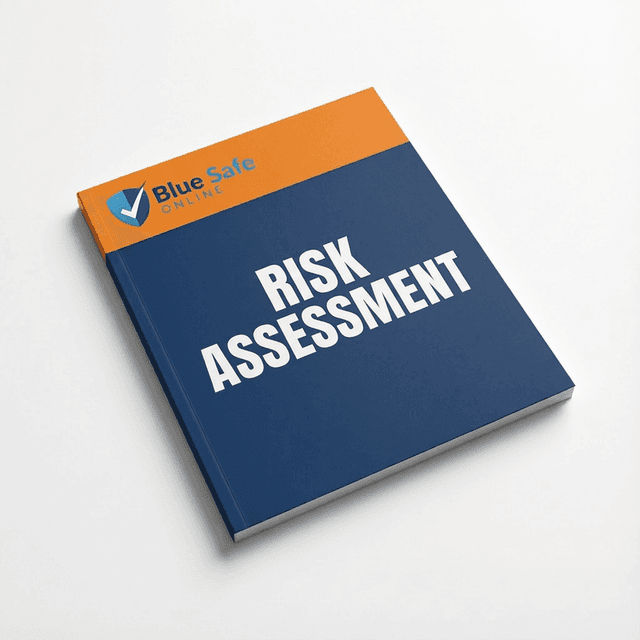
Drilling Rig Mobilisation Maintenance and Cuttings Management Risk Assessment
- 100% Compliant with Australian WHS Acts & Regulations
- Fully Editable MS Word & PDF Formats Included
- Pre-filled Content – Ready to Deploy Immediately
- Customisable – Easily Add Your Logo & Site Details
- Includes 2 Years of Free Compliance Updates
Two Ways to Get Started
Upload your logo and company details — we'll customise all your documents automatically.
Download the Word template and edit directly.
Product Overview
Identify and control organisational risks associated with Drilling Rig Mobilisation, Maintenance and Cuttings Management at a management and systems level, before crews and contractors arrive on site. This comprehensive Risk Assessment supports executive Due Diligence, strengthens WHS Risk Management frameworks, and helps demonstrate compliance with the WHS Act while protecting your operational liability.
Risk Categories & Hazards Covered
This document assesses risks and outlines management controls for:
- WHS Governance, Roles and Legislative Compliance: Assessment of board, officer and management responsibilities, consultation arrangements, and verification that WHS duties, reporting and documentation systems meet legislative requirements.
- Contractor Selection, Pre‑Qualification and Onboarding: Management of drilling and transport contractor vetting, insurances, safety performance, and induction processes prior to mobilisation.
- Rig Mobilisation, Demobilisation and Transport Planning: Coordination of logistics, load restraint, route risk assessment, scheduling and interface risks between transport providers, rig crews and site operators.
- Site Selection, Pad Design and Ground Stability: Evaluation of geotechnical conditions, pad layout, exclusion zones, drainage and ground bearing capacity to support safe rig installation and traffic movements.
- Plant and Equipment Design, Procurement and Maintenance Systems: Governance of drilling plant selection, engineering controls, guarding, inspections, preventive maintenance, defect management and OEM compliance.
- Rig Setup, Rig Up/Rig Down and Structural Integrity Management: Oversight of erection and dismantling methodologies, load paths, guying/anchoring, lift planning and verification of structural stability under operating conditions.
- Drill Rod, Pipe and Collar Handling and Storage Systems: Management of storage racking, mechanical handling aids, manual handling risks, dropped object controls and segregation of work areas.
- Drilling Mud System Design, Operation and Chemical Management: Assessment of mud plant configuration, tank and line integrity, chemical selection, SDS management, dosing controls and spill containment systems.
- Drill Cuttings Handling, Storage, Treatment and Disposal: Controls for cuttings collection systems, containment, classification, on‑site treatment options and compliant off‑site disposal or reuse pathways.
- Traffic, Mobile Plant and Journey Management: Planning of site traffic layouts, interaction between heavy vehicles, light vehicles and pedestrians, journey management procedures and fatigue‑related driving risks.
- Workforce Competency, Training and Supervision Structures: Verification of competency profiles, licences, VOCs, supervision levels and ongoing training requirements for drilling, maintenance and transport activities.
- Procedures, Permits and Change Management: Governance of operating procedures, permit‑to‑work systems, simultaneous operations (SIMOPS) controls and formal management of change for plant, process or scope variations.
- Emergency Preparedness, Incident Management and Well Control Events: Planning for rig‑specific emergencies, blowout or loss‑of‑containment scenarios, rescue arrangements, communication protocols and post‑incident review processes.
- Health, Hygiene, Fatigue and Remote Work Management: Systems for managing remote and isolated work, fatigue, heat and cold stress, noise, dust, hazardous substances and health surveillance where required.
- Environmental Protection, Decommissioning and Site Rehabilitation: Assessment of controls for spills, waste, noise, dust, flora/fauna disturbance, end‑of‑project decommissioning and rehabilitation to regulatory and client standards.
Who is this for?
This Risk Assessment is designed for Business Owners, Senior Managers, Project Directors and Safety Professionals responsible for planning and overseeing drilling rig mobilisation, maintenance and cuttings management operations across mining, energy and civil projects.
Hazards & Risks Covered
| Hazard | Risk Description |
|---|---|
| 1. WHS Governance, Roles and Legislative Compliance |
|
| 2. Contractor Selection, Pre‑Qualification and Onboarding |
|
| 3. Planning and Coordination of Rig Mobilisation, Demobilisation and Transport |
|
| 4. Site Selection, Pad Design and Ground Stability Management |
|
| 5. Plant and Equipment Design, Procurement and Maintenance Systems |
|
| 6. Drilling Rig Setup, Rig Up/Rig Down Management and Structural Integrity |
|
| 7. Drill Rod, Pipe and Collar Handling and Storage Systems |
|
| 8. Drilling Mud System Design, Operation and Chemical Management |
|
| 9. Drill Cuttings Handling, Storage, Treatment and Disposal |
|
| 10. Traffic, Mobile Plant and Journey Management for Rig Mobilisation |
|
| 11. Workforce Competency, Training and Supervision |
|
| 12. Procedures, Permits and Change Management |
|
| 13. Emergency Preparedness, Incident Management and Well Control Events |
|
| 14. Health, Hygiene, Fatigue and Remote Work Management |
|
| 15. Environmental Protection, Decommissioning and Site Rehabilitation |
|
Need to add specific hazards for your workplace?
Don't worry if a specific hazard isn't listed above. Once you purchase, simply log in to your Client Portal and add your own custom hazards at no extra cost. We take care of the hard work—creating the risk ratings and control measures for free—to ensure your document is compliant within minutes.
Legislation & References
This document was researched and developed to align with:
- Work Health and Safety Act 2011
- Work Health and Safety Regulations 2017
- AS/NZS ISO 31000:2018: Risk management — Guidelines
- AS/NZS 4801 / ISO 45001: Occupational health and safety management systems — Requirements with guidance for use.
- AS 4024 series: Safety of machinery — Principles for design, risk assessment and risk reduction for drilling and associated plant.
- AS 2550 & AS 1418 series: Cranes, hoists and winches — Safe use and design guidance relevant to rig up/rig down lifting operations.
- AS 1940: The storage and handling of flammable and combustible liquids, where applicable to fuel and chemical storage for drilling operations.
- Managing Risks of Plant in the Workplace Code of Practice: Guidance on selection, inspection, maintenance and safe use of drilling plant and equipment.
- Managing the Work Environment and Facilities Code of Practice: Requirements for remote work, amenities and environmental conditions around drilling sites.
- Hazardous Chemicals (Managing Risks) Code of Practice: Controls for drilling mud additives, cleaning agents and other hazardous substances.
- Managing Noise and Preventing Hearing Loss at Work Code of Practice: Reference for noise risk management associated with drilling rigs and ancillary plant.
Standard Risk Assessment Features (Click to Expand)
- Comprehensive hazard identification for all activities
- Risk rating matrix with likelihood and consequence analysis
- Existing control measures evaluation
- Residual risk assessment after controls
- Hierarchy of controls recommendations
- Action priority rankings
- Review and monitoring requirements
- Consultation and communication records
- Legal compliance references
- Sign-off and approval sections
Suitable for Industries
$79.5
Includes all formats + 2 years updates
Drilling Rig Mobilisation Maintenance and Cuttings Management Risk Assessment
- • 100% Compliant with Australian WHS Acts & Regulations
- • Fully Editable MS Word & PDF Formats Included
- • Pre-filled Content – Ready to Deploy Immediately
- • Customisable – Easily Add Your Logo & Site Details
- • Includes 2 Years of Free Compliance Updates
Drilling Rig Mobilisation Maintenance and Cuttings Management Risk Assessment
Product Overview
Identify and control organisational risks associated with Drilling Rig Mobilisation, Maintenance and Cuttings Management at a management and systems level, before crews and contractors arrive on site. This comprehensive Risk Assessment supports executive Due Diligence, strengthens WHS Risk Management frameworks, and helps demonstrate compliance with the WHS Act while protecting your operational liability.
Risk Categories & Hazards Covered
This document assesses risks and outlines management controls for:
- WHS Governance, Roles and Legislative Compliance: Assessment of board, officer and management responsibilities, consultation arrangements, and verification that WHS duties, reporting and documentation systems meet legislative requirements.
- Contractor Selection, Pre‑Qualification and Onboarding: Management of drilling and transport contractor vetting, insurances, safety performance, and induction processes prior to mobilisation.
- Rig Mobilisation, Demobilisation and Transport Planning: Coordination of logistics, load restraint, route risk assessment, scheduling and interface risks between transport providers, rig crews and site operators.
- Site Selection, Pad Design and Ground Stability: Evaluation of geotechnical conditions, pad layout, exclusion zones, drainage and ground bearing capacity to support safe rig installation and traffic movements.
- Plant and Equipment Design, Procurement and Maintenance Systems: Governance of drilling plant selection, engineering controls, guarding, inspections, preventive maintenance, defect management and OEM compliance.
- Rig Setup, Rig Up/Rig Down and Structural Integrity Management: Oversight of erection and dismantling methodologies, load paths, guying/anchoring, lift planning and verification of structural stability under operating conditions.
- Drill Rod, Pipe and Collar Handling and Storage Systems: Management of storage racking, mechanical handling aids, manual handling risks, dropped object controls and segregation of work areas.
- Drilling Mud System Design, Operation and Chemical Management: Assessment of mud plant configuration, tank and line integrity, chemical selection, SDS management, dosing controls and spill containment systems.
- Drill Cuttings Handling, Storage, Treatment and Disposal: Controls for cuttings collection systems, containment, classification, on‑site treatment options and compliant off‑site disposal or reuse pathways.
- Traffic, Mobile Plant and Journey Management: Planning of site traffic layouts, interaction between heavy vehicles, light vehicles and pedestrians, journey management procedures and fatigue‑related driving risks.
- Workforce Competency, Training and Supervision Structures: Verification of competency profiles, licences, VOCs, supervision levels and ongoing training requirements for drilling, maintenance and transport activities.
- Procedures, Permits and Change Management: Governance of operating procedures, permit‑to‑work systems, simultaneous operations (SIMOPS) controls and formal management of change for plant, process or scope variations.
- Emergency Preparedness, Incident Management and Well Control Events: Planning for rig‑specific emergencies, blowout or loss‑of‑containment scenarios, rescue arrangements, communication protocols and post‑incident review processes.
- Health, Hygiene, Fatigue and Remote Work Management: Systems for managing remote and isolated work, fatigue, heat and cold stress, noise, dust, hazardous substances and health surveillance where required.
- Environmental Protection, Decommissioning and Site Rehabilitation: Assessment of controls for spills, waste, noise, dust, flora/fauna disturbance, end‑of‑project decommissioning and rehabilitation to regulatory and client standards.
Who is this for?
This Risk Assessment is designed for Business Owners, Senior Managers, Project Directors and Safety Professionals responsible for planning and overseeing drilling rig mobilisation, maintenance and cuttings management operations across mining, energy and civil projects.
Hazards & Risks Covered
| Hazard | Risk Description |
|---|---|
| 1. WHS Governance, Roles and Legislative Compliance |
|
| 2. Contractor Selection, Pre‑Qualification and Onboarding |
|
| 3. Planning and Coordination of Rig Mobilisation, Demobilisation and Transport |
|
| 4. Site Selection, Pad Design and Ground Stability Management |
|
| 5. Plant and Equipment Design, Procurement and Maintenance Systems |
|
| 6. Drilling Rig Setup, Rig Up/Rig Down Management and Structural Integrity |
|
| 7. Drill Rod, Pipe and Collar Handling and Storage Systems |
|
| 8. Drilling Mud System Design, Operation and Chemical Management |
|
| 9. Drill Cuttings Handling, Storage, Treatment and Disposal |
|
| 10. Traffic, Mobile Plant and Journey Management for Rig Mobilisation |
|
| 11. Workforce Competency, Training and Supervision |
|
| 12. Procedures, Permits and Change Management |
|
| 13. Emergency Preparedness, Incident Management and Well Control Events |
|
| 14. Health, Hygiene, Fatigue and Remote Work Management |
|
| 15. Environmental Protection, Decommissioning and Site Rehabilitation |
|
Need to add specific hazards for your workplace?
Don't worry if a specific hazard isn't listed above. Once you purchase, simply log in to your Client Portal and add your own custom hazards at no extra cost. We take care of the hard work—creating the risk ratings and control measures for free—to ensure your document is compliant within minutes.
Legislation & References
This document was researched and developed to align with:
- Work Health and Safety Act 2011
- Work Health and Safety Regulations 2017
- AS/NZS ISO 31000:2018: Risk management — Guidelines
- AS/NZS 4801 / ISO 45001: Occupational health and safety management systems — Requirements with guidance for use.
- AS 4024 series: Safety of machinery — Principles for design, risk assessment and risk reduction for drilling and associated plant.
- AS 2550 & AS 1418 series: Cranes, hoists and winches — Safe use and design guidance relevant to rig up/rig down lifting operations.
- AS 1940: The storage and handling of flammable and combustible liquids, where applicable to fuel and chemical storage for drilling operations.
- Managing Risks of Plant in the Workplace Code of Practice: Guidance on selection, inspection, maintenance and safe use of drilling plant and equipment.
- Managing the Work Environment and Facilities Code of Practice: Requirements for remote work, amenities and environmental conditions around drilling sites.
- Hazardous Chemicals (Managing Risks) Code of Practice: Controls for drilling mud additives, cleaning agents and other hazardous substances.
- Managing Noise and Preventing Hearing Loss at Work Code of Practice: Reference for noise risk management associated with drilling rigs and ancillary plant.
Standard Risk Assessment Features (Click to Expand)
- Comprehensive hazard identification for all activities
- Risk rating matrix with likelihood and consequence analysis
- Existing control measures evaluation
- Residual risk assessment after controls
- Hierarchy of controls recommendations
- Action priority rankings
- Review and monitoring requirements
- Consultation and communication records
- Legal compliance references
- Sign-off and approval sections
$79.5