

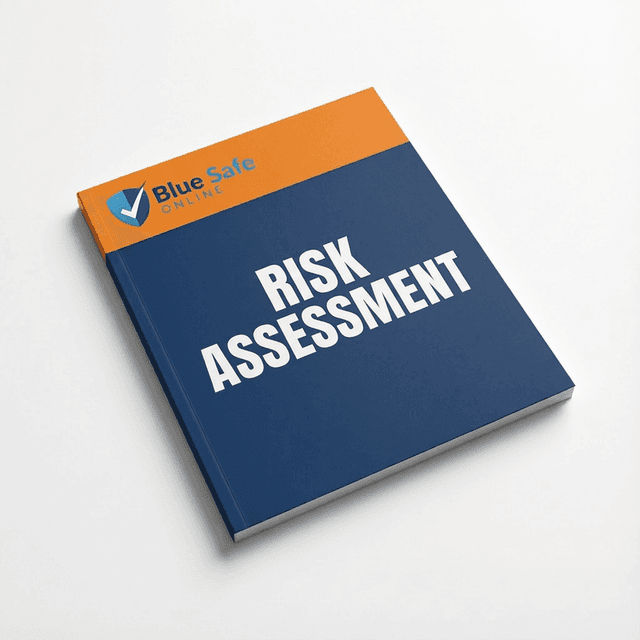
Removalist Safety Risk Assessment
- 100% Compliant with Australian WHS Acts & Regulations
- Fully Editable MS Word & PDF Formats Included
- Pre-filled Content – Ready to Deploy Immediately
- Customisable – Easily Add Your Logo & Site Details
- Includes 2 Years of Free Compliance Updates
Two Ways to Get Started
Upload your logo and company details — we'll customise all your documents automatically.
Download the Word template and edit directly.
Product Overview
Identify and control organisational risks associated with Removalist operations using this comprehensive Removalist Safety Risk Assessment tailored for management planning, governance, and system design. This document supports compliance with the WHS Act, demonstrates Due Diligence, and helps protect your business from operational and legal liability exposures.
Risk Categories & Hazards Covered
This document assesses risks and outlines management controls for:
- Governance, WHS Leadership and Legal Compliance: Assessment of board and senior management responsibilities, safety leadership expectations, legal obligations, and the integration of WHS into corporate governance for removalist operations.
- Risk Management and Planning for Complex Moves: Management of pre-move risk assessments, complex or multi-site relocations, high-value or sensitive items, and planning controls for non-routine or high-risk removalist work.
- Workforce Competency, Training and Supervision: Systems for verifying competency of removalists, induction programs, task-specific training (e.g. handling fragile or heavy items), and supervisory arrangements across multiple crews and locations.
- Manual Tasks and Musculoskeletal Risk Management System: Organisational controls for hazardous manual tasks, lifting and carrying techniques, use of trolleys and lifting aids, job rotation, and ergonomic program development to minimise sprain and strain injuries.
- Vehicle, Plant and Equipment Procurement and Maintenance: Policies for selecting compliant trucks, vans, lifting devices and trolleys, pre-start checks, scheduled maintenance, and defect reporting systems to ensure safe and reliable plant.
- Load Restraint, Vehicle Loading and Stability Management: Frameworks for load planning, selection of load restraint equipment, verification of restraint methods, and controls to prevent load shift, vehicle instability and rollover incidents.
- Traffic, Parking and Site Access Management: Protocols for route planning, kerbside and driveway parking, interaction with public traffic and pedestrians, and coordination with clients and building managers for safe vehicle and crew access.
- Stairwell, Limited Access and Building Interface Management: Assessment of risks associated with stairs, narrow corridors, elevators, multi-storey moves, and building protection measures to prevent damage and injuries during access and egress.
- Fatigue, Scheduling and Workload Management: Systems for managing long shifts, early starts, extended driving, back-to-back jobs, and seasonal peaks, including rostering, rest breaks and fatigue risk monitoring for drivers and offsiders.
- Contractor, Labour Hire and Third-Party Management: Controls for engaging subcontractors and labour hire workers, WHS competency checks, information sharing, and alignment of safety expectations across third-party providers.
- Incident Reporting, Investigation and Continuous Improvement: Organisational procedures for hazard reporting, near-miss capture, incident investigation, root cause analysis, and corrective action tracking to drive ongoing WHS improvement.
- Emergency Preparedness, First Aid and Remote Work: Planning for medical emergencies, vehicle breakdowns, remote or regional moves, first aid provisions in vehicles, and communication systems for isolated or after-hours work.
- Client Communication, Expectations and Property Interface: Management of client briefings, access arrangements, protection of client property, managing time pressures, and clarifying responsibilities to minimise conflict and claims.
- Psychosocial Risks, Violence and Aggression Management: Assessment of psychosocial hazards including client aggression, public confrontation, time pressure, and job insecurity, with controls for de-escalation, support, and reporting.
Who is this for?
This Risk Assessment is designed for Business Owners, Operations Managers, and Safety Managers responsible for planning, governing and overseeing Removalist and relocation services across their organisation.
Hazards & Risks Covered
| Hazard | Risk Description |
|---|---|
| 1. Governance, WHS Leadership and Legal Compliance |
|
| 2. Risk Management and Planning for Complex Moves |
|
| 3. Workforce Competency, Training and Supervision |
|
| 4. Manual Tasks and Musculoskeletal Risk Management System |
|
| 5. Vehicle, Plant and Equipment Procurement and Maintenance |
|
| 6. Load Restraint, Vehicle Loading and Stability Management |
|
| 7. Traffic, Parking and Site Access Management |
|
| 8. Stairwell, Limited Access and Building Interface Management |
|
| 9. Fatigue, Scheduling and Workload Management |
|
| 10. Contractor, Labour Hire and Third-Party Management |
|
| 11. Incident Reporting, Investigation and Continuous Improvement |
|
| 12. Emergency Preparedness, First Aid and Remote Work |
|
| 13. Client Communication, Expectations and Property Interface |
|
| 14. Psychosocial Risks, Violence and Aggression Management |
|
Need to add specific hazards for your workplace?
Don't worry if a specific hazard isn't listed above. Once you purchase, simply log in to your Client Portal and add your own custom hazards at no extra cost. We take care of the hard work—creating the risk ratings and control measures for free—to ensure your document is compliant within minutes.
Legislation & References
This document was researched and developed to align with:
- Work Health and Safety Act 2011
- Work Health and Safety Regulations 2017
- AS/NZS ISO 31000:2018: Risk management — Guidelines
- Safe Work Australia – Hazardous Manual Tasks Code of Practice: Guidance on managing risks of musculoskeletal disorders from manual handling.
- Safe Work Australia – Managing the Risk of Psychosocial Hazards at Work Code of Practice: Framework for identifying and controlling psychosocial risks.
- Safe Work Australia – Managing Risks of Plant in the Workplace Code of Practice: Requirements for safe selection, use and maintenance of vehicles and equipment.
- NHVR Load Restraint Guide (latest edition): Principles and methods for safe load restraint on heavy and light vehicles.
- AS 4142.1: Industrial trucks – Safety requirements and verification.
- AS/NZS 4801 / ISO 45001: Occupational health and safety management systems – Requirements and guidance for systematic WHS management.
Standard Risk Assessment Features (Click to Expand)
- Comprehensive hazard identification for all activities
- Risk rating matrix with likelihood and consequence analysis
- Existing control measures evaluation
- Residual risk assessment after controls
- Hierarchy of controls recommendations
- Action priority rankings
- Review and monitoring requirements
- Consultation and communication records
- Legal compliance references
- Sign-off and approval sections
Suitable for Industries
$79.5
Includes all formats + 2 years updates
Removalist Safety Risk Assessment
- • 100% Compliant with Australian WHS Acts & Regulations
- • Fully Editable MS Word & PDF Formats Included
- • Pre-filled Content – Ready to Deploy Immediately
- • Customisable – Easily Add Your Logo & Site Details
- • Includes 2 Years of Free Compliance Updates
Removalist Safety Risk Assessment
Product Overview
Identify and control organisational risks associated with Removalist operations using this comprehensive Removalist Safety Risk Assessment tailored for management planning, governance, and system design. This document supports compliance with the WHS Act, demonstrates Due Diligence, and helps protect your business from operational and legal liability exposures.
Risk Categories & Hazards Covered
This document assesses risks and outlines management controls for:
- Governance, WHS Leadership and Legal Compliance: Assessment of board and senior management responsibilities, safety leadership expectations, legal obligations, and the integration of WHS into corporate governance for removalist operations.
- Risk Management and Planning for Complex Moves: Management of pre-move risk assessments, complex or multi-site relocations, high-value or sensitive items, and planning controls for non-routine or high-risk removalist work.
- Workforce Competency, Training and Supervision: Systems for verifying competency of removalists, induction programs, task-specific training (e.g. handling fragile or heavy items), and supervisory arrangements across multiple crews and locations.
- Manual Tasks and Musculoskeletal Risk Management System: Organisational controls for hazardous manual tasks, lifting and carrying techniques, use of trolleys and lifting aids, job rotation, and ergonomic program development to minimise sprain and strain injuries.
- Vehicle, Plant and Equipment Procurement and Maintenance: Policies for selecting compliant trucks, vans, lifting devices and trolleys, pre-start checks, scheduled maintenance, and defect reporting systems to ensure safe and reliable plant.
- Load Restraint, Vehicle Loading and Stability Management: Frameworks for load planning, selection of load restraint equipment, verification of restraint methods, and controls to prevent load shift, vehicle instability and rollover incidents.
- Traffic, Parking and Site Access Management: Protocols for route planning, kerbside and driveway parking, interaction with public traffic and pedestrians, and coordination with clients and building managers for safe vehicle and crew access.
- Stairwell, Limited Access and Building Interface Management: Assessment of risks associated with stairs, narrow corridors, elevators, multi-storey moves, and building protection measures to prevent damage and injuries during access and egress.
- Fatigue, Scheduling and Workload Management: Systems for managing long shifts, early starts, extended driving, back-to-back jobs, and seasonal peaks, including rostering, rest breaks and fatigue risk monitoring for drivers and offsiders.
- Contractor, Labour Hire and Third-Party Management: Controls for engaging subcontractors and labour hire workers, WHS competency checks, information sharing, and alignment of safety expectations across third-party providers.
- Incident Reporting, Investigation and Continuous Improvement: Organisational procedures for hazard reporting, near-miss capture, incident investigation, root cause analysis, and corrective action tracking to drive ongoing WHS improvement.
- Emergency Preparedness, First Aid and Remote Work: Planning for medical emergencies, vehicle breakdowns, remote or regional moves, first aid provisions in vehicles, and communication systems for isolated or after-hours work.
- Client Communication, Expectations and Property Interface: Management of client briefings, access arrangements, protection of client property, managing time pressures, and clarifying responsibilities to minimise conflict and claims.
- Psychosocial Risks, Violence and Aggression Management: Assessment of psychosocial hazards including client aggression, public confrontation, time pressure, and job insecurity, with controls for de-escalation, support, and reporting.
Who is this for?
This Risk Assessment is designed for Business Owners, Operations Managers, and Safety Managers responsible for planning, governing and overseeing Removalist and relocation services across their organisation.
Hazards & Risks Covered
| Hazard | Risk Description |
|---|---|
| 1. Governance, WHS Leadership and Legal Compliance |
|
| 2. Risk Management and Planning for Complex Moves |
|
| 3. Workforce Competency, Training and Supervision |
|
| 4. Manual Tasks and Musculoskeletal Risk Management System |
|
| 5. Vehicle, Plant and Equipment Procurement and Maintenance |
|
| 6. Load Restraint, Vehicle Loading and Stability Management |
|
| 7. Traffic, Parking and Site Access Management |
|
| 8. Stairwell, Limited Access and Building Interface Management |
|
| 9. Fatigue, Scheduling and Workload Management |
|
| 10. Contractor, Labour Hire and Third-Party Management |
|
| 11. Incident Reporting, Investigation and Continuous Improvement |
|
| 12. Emergency Preparedness, First Aid and Remote Work |
|
| 13. Client Communication, Expectations and Property Interface |
|
| 14. Psychosocial Risks, Violence and Aggression Management |
|
Need to add specific hazards for your workplace?
Don't worry if a specific hazard isn't listed above. Once you purchase, simply log in to your Client Portal and add your own custom hazards at no extra cost. We take care of the hard work—creating the risk ratings and control measures for free—to ensure your document is compliant within minutes.
Legislation & References
This document was researched and developed to align with:
- Work Health and Safety Act 2011
- Work Health and Safety Regulations 2017
- AS/NZS ISO 31000:2018: Risk management — Guidelines
- Safe Work Australia – Hazardous Manual Tasks Code of Practice: Guidance on managing risks of musculoskeletal disorders from manual handling.
- Safe Work Australia – Managing the Risk of Psychosocial Hazards at Work Code of Practice: Framework for identifying and controlling psychosocial risks.
- Safe Work Australia – Managing Risks of Plant in the Workplace Code of Practice: Requirements for safe selection, use and maintenance of vehicles and equipment.
- NHVR Load Restraint Guide (latest edition): Principles and methods for safe load restraint on heavy and light vehicles.
- AS 4142.1: Industrial trucks – Safety requirements and verification.
- AS/NZS 4801 / ISO 45001: Occupational health and safety management systems – Requirements and guidance for systematic WHS management.
Standard Risk Assessment Features (Click to Expand)
- Comprehensive hazard identification for all activities
- Risk rating matrix with likelihood and consequence analysis
- Existing control measures evaluation
- Residual risk assessment after controls
- Hierarchy of controls recommendations
- Action priority rankings
- Review and monitoring requirements
- Consultation and communication records
- Legal compliance references
- Sign-off and approval sections
$79.5