

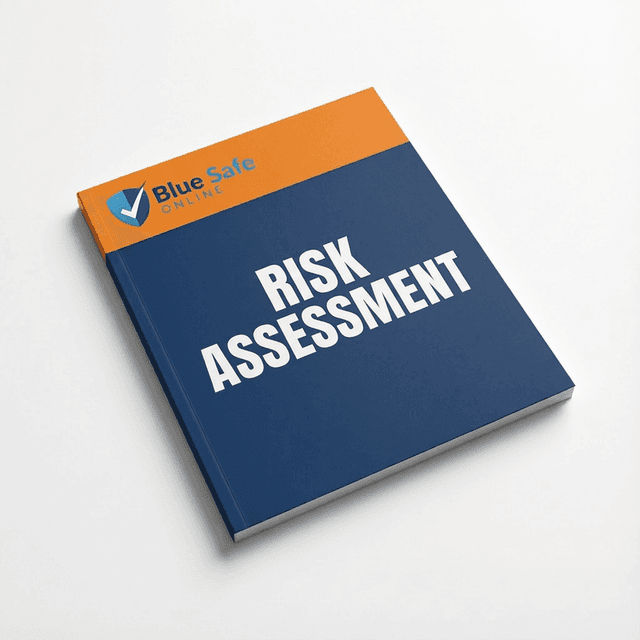
Geotechnical and Water Well Drilling Operations Risk Assessment
- 100% Compliant with Australian WHS Acts & Regulations
- Fully Editable MS Word & PDF Formats Included
- Pre-filled Content – Ready to Deploy Immediately
- Customisable – Easily Add Your Logo & Site Details
- Includes 2 Years of Free Compliance Updates
Two Ways to Get Started
Upload your logo and company details — we'll customise all your documents automatically.
Download the Word template and edit directly.
Product Overview
Identify and control organisational risks associated with Geotechnical and Water Well Drilling Operations through a structured, management-level WHS Risk Management framework. This Risk Assessment supports compliance with the WHS Act, strengthens Due Diligence for Officers, and helps protect your business from operational and legal exposure.
Risk Categories & Hazards Covered
This document assesses risks and outlines management controls for:
- Governance & WHS Duties: Assessment of officer due diligence, WHS responsibilities, legal exposure and the integration of safety obligations into corporate governance for drilling operations.
- Strategic WHS Planning & Change Management: Management of risk assessment processes, change management for new drilling methods or sites, and the systematic review of controls across projects.
- Contractor, Subcontractor & Labour Hire Management: Protocols for prequalification, selection, onboarding, supervision and performance monitoring of third‑party drilling and support crews.
- Competency, Training & Licence Control: Systems for verifying licences, trade qualifications, high risk work authorisations and ongoing competency for drillers, offsiders and supervisors.
- Plant, Equipment & Engineering Controls: Assessment of drilling rigs, support vehicles, guarding, interlocks, pressure control systems and other engineering safeguards used in geotechnical and water well operations.
- Maintenance, Inspection & Pre‑Use Verification: Management of inspection regimes, defect reporting, pre‑start checks and preventative maintenance for rigs, pumps, hoists and associated plant.
- Ground Conditions, Borehole Stability & Pressure Management: Evaluation of subsurface hazards, collapse potential, blowout risks, pressure relief systems and control measures for unstable formations.
- Traffic, Mobile Plant & Journey Management: Planning for site access, interaction between drilling rigs and other mobile plant, road travel to remote locations and controls for reversing, loading and unloading.
- Hazardous Substances, Drilling Fluids & Environmental Protection: Management of chemical selection, storage, handling, spill response and contamination risks to soil, groundwater and surface water.
- Health Risks: Noise, Vibration, Manual Handling & Fatigue: Assessment of exposure to physical and ergonomic hazards, shift arrangements, fitness for work and health monitoring for drilling personnel.
- Remote & Isolated Work, Communications & Emergency Preparedness: Systems for lone and remote work, communication protocols, rescue planning, first aid and emergency response for drilling sites.
- Documentation, Procedures & Information Management: Control of drilling procedures, permits, safety documentation, records, and version control to support consistent and compliant operations.
- Incident Reporting, Investigation & Continuous Improvement: Frameworks for capturing incidents and near misses, conducting investigations, implementing corrective actions and reviewing risk controls.
- Client, Community & Stakeholder Interface: Management of expectations, consultation, access arrangements, notification requirements and reputational risk with clients, landholders and local communities.
Who is this for?
This Risk Assessment is designed for Business Owners, Operations Managers, Drilling Managers and Safety Professionals responsible for planning, approving and overseeing Geotechnical and Water Well Drilling operations across their organisation.
Hazards & Risks Covered
| Hazard | Risk Description |
|---|---|
| 1. Governance, WHS Duties and Legal Compliance |
|
| 2. WHS Planning, Risk Management and Change Management |
|
| 3. Contractor, Subcontractor and Labour Hire Management |
|
| 4. Competency, Training and Licence Management |
|
| 5. Plant, Equipment and Engineering Control Systems |
|
| 6. Maintenance, Inspection and Pre‑Use Verification Systems |
|
| 7. Ground Conditions, Borehole Stability and Pressure Management |
|
| 8. Traffic, Mobile Plant and Journey Management |
|
| 9. Hazardous Substances, Drilling Fluids and Environmental Contamination |
|
| 10. Health Risks: Noise, Vibration, Manual Handling and Fatigue |
|
| 11. Remote and Isolated Work, Communications and Emergency Preparedness |
|
| 12. Documentation, Procedures and Information Management |
|
| 13. Incident Reporting, Investigation and Continuous Improvement |
|
| 14. Client, Community and Stakeholder Interface |
|
Need to add specific hazards for your workplace?
Don't worry if a specific hazard isn't listed above. Once you purchase, simply log in to your Client Portal and add your own custom hazards at no extra cost. We take care of the hard work—creating the risk ratings and control measures for free—to ensure your document is compliant within minutes.
Legislation & References
This document was researched and developed to align with:
- Work Health and Safety Act 2011
- Work Health and Safety Regulations 2017
- AS/NZS ISO 31000:2018: Risk management — Guidelines
- Safe Work Australia – Code of Practice: How to Manage Work Health and Safety Risks: Guidance on systematic risk management processes.
- Safe Work Australia – Code of Practice: Managing the Risk of Plant in the Workplace: Requirements for plant selection, use, inspection and maintenance.
- Safe Work Australia – Code of Practice: Hazardous Chemicals: Duties for classification, labelling, storage and handling of hazardous substances and drilling fluids.
- Safe Work Australia – Code of Practice: Managing Noise and Preventing Hearing Loss at Work: Control measures for noise exposure from drilling plant and equipment.
- Safe Work Australia – Code of Practice: Managing the Work Environment and Facilities: Requirements for remote and temporary drilling sites, amenities and environmental conditions.
- AS/NZS 4801 / ISO 45001: Occupational health and safety management systems — requirements for systematic WHS governance.
- AS 2865: Confined spaces — referenced where drilling intersects pits, shafts or other confined environments.
- AS/NZS 60079 (Series): Explosive atmospheres — relevant where flammable gases may be encountered during drilling.
- AS 1940: The storage and handling of flammable and combustible liquids — for fuel and chemical management on drilling sites.
Standard Risk Assessment Features (Click to Expand)
- Comprehensive hazard identification for all activities
- Risk rating matrix with likelihood and consequence analysis
- Existing control measures evaluation
- Residual risk assessment after controls
- Hierarchy of controls recommendations
- Action priority rankings
- Review and monitoring requirements
- Consultation and communication records
- Legal compliance references
- Sign-off and approval sections
Suitable for Industries
$79.5
Includes all formats + 2 years updates
Geotechnical and Water Well Drilling Operations Risk Assessment
- • 100% Compliant with Australian WHS Acts & Regulations
- • Fully Editable MS Word & PDF Formats Included
- • Pre-filled Content – Ready to Deploy Immediately
- • Customisable – Easily Add Your Logo & Site Details
- • Includes 2 Years of Free Compliance Updates
Geotechnical and Water Well Drilling Operations Risk Assessment
Product Overview
Identify and control organisational risks associated with Geotechnical and Water Well Drilling Operations through a structured, management-level WHS Risk Management framework. This Risk Assessment supports compliance with the WHS Act, strengthens Due Diligence for Officers, and helps protect your business from operational and legal exposure.
Risk Categories & Hazards Covered
This document assesses risks and outlines management controls for:
- Governance & WHS Duties: Assessment of officer due diligence, WHS responsibilities, legal exposure and the integration of safety obligations into corporate governance for drilling operations.
- Strategic WHS Planning & Change Management: Management of risk assessment processes, change management for new drilling methods or sites, and the systematic review of controls across projects.
- Contractor, Subcontractor & Labour Hire Management: Protocols for prequalification, selection, onboarding, supervision and performance monitoring of third‑party drilling and support crews.
- Competency, Training & Licence Control: Systems for verifying licences, trade qualifications, high risk work authorisations and ongoing competency for drillers, offsiders and supervisors.
- Plant, Equipment & Engineering Controls: Assessment of drilling rigs, support vehicles, guarding, interlocks, pressure control systems and other engineering safeguards used in geotechnical and water well operations.
- Maintenance, Inspection & Pre‑Use Verification: Management of inspection regimes, defect reporting, pre‑start checks and preventative maintenance for rigs, pumps, hoists and associated plant.
- Ground Conditions, Borehole Stability & Pressure Management: Evaluation of subsurface hazards, collapse potential, blowout risks, pressure relief systems and control measures for unstable formations.
- Traffic, Mobile Plant & Journey Management: Planning for site access, interaction between drilling rigs and other mobile plant, road travel to remote locations and controls for reversing, loading and unloading.
- Hazardous Substances, Drilling Fluids & Environmental Protection: Management of chemical selection, storage, handling, spill response and contamination risks to soil, groundwater and surface water.
- Health Risks: Noise, Vibration, Manual Handling & Fatigue: Assessment of exposure to physical and ergonomic hazards, shift arrangements, fitness for work and health monitoring for drilling personnel.
- Remote & Isolated Work, Communications & Emergency Preparedness: Systems for lone and remote work, communication protocols, rescue planning, first aid and emergency response for drilling sites.
- Documentation, Procedures & Information Management: Control of drilling procedures, permits, safety documentation, records, and version control to support consistent and compliant operations.
- Incident Reporting, Investigation & Continuous Improvement: Frameworks for capturing incidents and near misses, conducting investigations, implementing corrective actions and reviewing risk controls.
- Client, Community & Stakeholder Interface: Management of expectations, consultation, access arrangements, notification requirements and reputational risk with clients, landholders and local communities.
Who is this for?
This Risk Assessment is designed for Business Owners, Operations Managers, Drilling Managers and Safety Professionals responsible for planning, approving and overseeing Geotechnical and Water Well Drilling operations across their organisation.
Hazards & Risks Covered
| Hazard | Risk Description |
|---|---|
| 1. Governance, WHS Duties and Legal Compliance |
|
| 2. WHS Planning, Risk Management and Change Management |
|
| 3. Contractor, Subcontractor and Labour Hire Management |
|
| 4. Competency, Training and Licence Management |
|
| 5. Plant, Equipment and Engineering Control Systems |
|
| 6. Maintenance, Inspection and Pre‑Use Verification Systems |
|
| 7. Ground Conditions, Borehole Stability and Pressure Management |
|
| 8. Traffic, Mobile Plant and Journey Management |
|
| 9. Hazardous Substances, Drilling Fluids and Environmental Contamination |
|
| 10. Health Risks: Noise, Vibration, Manual Handling and Fatigue |
|
| 11. Remote and Isolated Work, Communications and Emergency Preparedness |
|
| 12. Documentation, Procedures and Information Management |
|
| 13. Incident Reporting, Investigation and Continuous Improvement |
|
| 14. Client, Community and Stakeholder Interface |
|
Need to add specific hazards for your workplace?
Don't worry if a specific hazard isn't listed above. Once you purchase, simply log in to your Client Portal and add your own custom hazards at no extra cost. We take care of the hard work—creating the risk ratings and control measures for free—to ensure your document is compliant within minutes.
Legislation & References
This document was researched and developed to align with:
- Work Health and Safety Act 2011
- Work Health and Safety Regulations 2017
- AS/NZS ISO 31000:2018: Risk management — Guidelines
- Safe Work Australia – Code of Practice: How to Manage Work Health and Safety Risks: Guidance on systematic risk management processes.
- Safe Work Australia – Code of Practice: Managing the Risk of Plant in the Workplace: Requirements for plant selection, use, inspection and maintenance.
- Safe Work Australia – Code of Practice: Hazardous Chemicals: Duties for classification, labelling, storage and handling of hazardous substances and drilling fluids.
- Safe Work Australia – Code of Practice: Managing Noise and Preventing Hearing Loss at Work: Control measures for noise exposure from drilling plant and equipment.
- Safe Work Australia – Code of Practice: Managing the Work Environment and Facilities: Requirements for remote and temporary drilling sites, amenities and environmental conditions.
- AS/NZS 4801 / ISO 45001: Occupational health and safety management systems — requirements for systematic WHS governance.
- AS 2865: Confined spaces — referenced where drilling intersects pits, shafts or other confined environments.
- AS/NZS 60079 (Series): Explosive atmospheres — relevant where flammable gases may be encountered during drilling.
- AS 1940: The storage and handling of flammable and combustible liquids — for fuel and chemical management on drilling sites.
Standard Risk Assessment Features (Click to Expand)
- Comprehensive hazard identification for all activities
- Risk rating matrix with likelihood and consequence analysis
- Existing control measures evaluation
- Residual risk assessment after controls
- Hierarchy of controls recommendations
- Action priority rankings
- Review and monitoring requirements
- Consultation and communication records
- Legal compliance references
- Sign-off and approval sections
$79.5